Police Negligence Lawyer: Your Guide to Civil Rights Legal Representation

Home » Police Negligence Lawyer: Your Guide to Civil Rights Legal Representation
Table of Contents
ToggleA lawyer specializing in police negligence represents victims harmed when law enforcement officers fail to exercise reasonable care in their duties or violate constitutional protections guaranteed under the United States Constitution. These attorneys operate within civil rights law, often called police misconduct attorneys, and focus on holding law enforcement accountable for actions ranging from excessive force to wrongful death.
A police negligence lawyer helps victims of police misconduct pursue financial compensation and accountability when officers breach their duty of care or violate constitutional rights through Section 1983 claims and state tort actions.
This article covers the full spectrum of police misconduct cases, including police brutality, wrongful arrest, unlawful searches, failure to protect, and other violations of civil rights. Included is the following:
- How to identify actionable police misconduct claims under federal and state law
- The types of compensation available for police brutality cases and other violations
- How experienced police misconduct attorneys build cases and overcome legal barriers
- Your rights when dealing with qualified immunity and statute of limitations challenges
- Practical steps to take immediately after police misconduct occurs
Understanding Police Negligence and Civil Rights Violations
Police negligence occurs when law enforcement officers fail to meet professional standards of care or violate constitutional protections during their interactions with citizens. This can involve active misconduct like unreasonable force or passive failures such as deliberate indifference to a detainee’s medical needs. For victims of police abuse, understanding these legal concepts is essential for pursuing meaningful legal representation and holding departments accountable.
Excessive Force and Brutality Cases
Excessive force cases arise when police officers use more force than is objectively reasonable under the circumstances, violating Fourth Amendment protections against unreasonable seizures. The legal standard, established in Graham v. Connor (1989), evaluates force from the perspective of a reasonable officer on the scene rather than with hindsight.
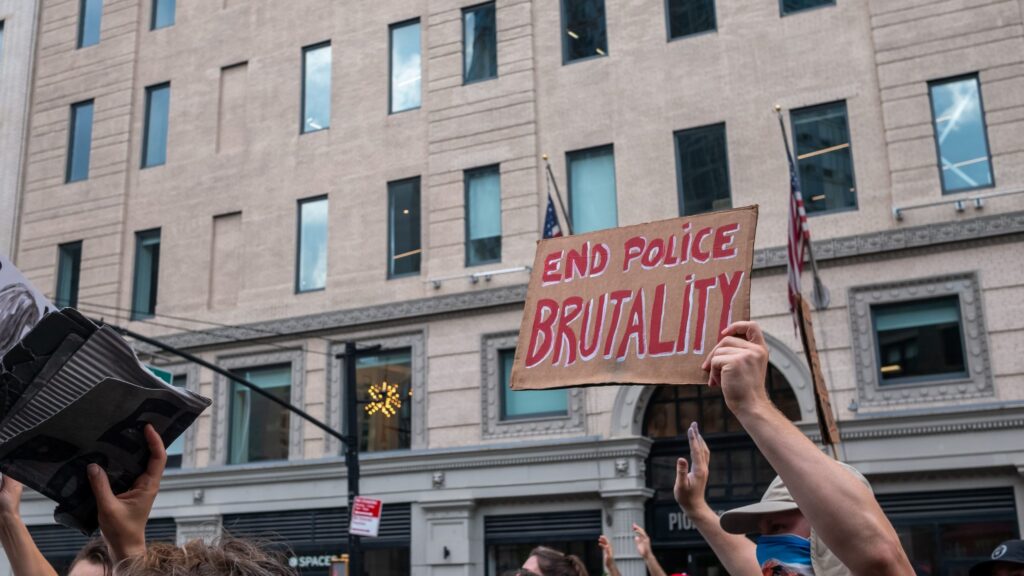
Police brutality encompasses deadly force used without justification, severe beatings, and prolonged use of restraint techniques. These incidents form the basis of many police misconduct lawsuits and represent clear violations of both the duty of care officers owe to the public and fundamental civil rights.
Wrongful Arrest and False Imprisonment
Wrongful arrest occurs when police officers detain individuals without probable cause or in violation of legal procedures. False arrest and false imprisonment claims require demonstrating that the officer lacked legal justification for the seizure and that the victim suffered damages as a result.
These violations connect directly to Fourth Amendment protections against unreasonable searches and seizures. A valid arrest requires probable cause—specific, articulable facts suggesting criminal activity—and must follow constitutional procedures. When officers arrest someone based on racial profiling, fabricated evidence, or without adequate investigation, victims can pursue police misconduct claims for unlawful arrest. Related claims may include malicious prosecution when officers pursue criminal charges despite knowing they lack merit.
Failure to Protect and Deliberate Indifference
Police have specific duties to protect individuals in their custody and, in some circumstances, civilians they have promised to aid. Failure to protect claims arise when officers exhibit deliberate indifference to known risks, such as failing to separate combative inmates or ignoring obvious medical emergencies.
Legal Rights and Compensation in Police Negligence Cases
Understanding your legal rights under federal and state law is crucial for pursuing police misconduct claims effectively. Section 1983 of the U.S. Code provides the primary vehicle for holding law enforcement accountable in federal courts for civil rights violations.
Constitutional Protections and Federal Law
The Fourth Amendment protects against unreasonable searches and seizures, covering excessive force, illegal searches and seizures, and wrongful arrest. The Eighth Amendment prohibits cruel and unusual punishment, applying to conditions of custody and treatment of detained individuals. The Fourteenth Amendment’s due process clause extends these protections to actions by state and local officers.
Section 1983 allows victims of police misconduct to sue state actors, including police officers and their employing municipalities, for violations of federal rights. Unlike standard negligence claims, Section 1983 requires proving a constitutional violation, not merely careless conduct. This distinction is significant: While state tort claims may allow recovery for simple negligence, federal civil rights cases demand evidence that officers violated clearly established constitutional protections.
Types of Damages and Compensation
Victims of police abuse can recover several categories of compensation depending on the severity of their injuries and the nature of the misconduct:
Compensatory damages include medical expenses for immediate treatment and ongoing care, lost wages from missed work and diminished earning capacity, and compensation for pain and suffering.
Punitive damages may be awarded when officers act with malicious intent or reckless disregard for constitutional rights. These damages punish particularly egregious conduct and deter future misconduct.
Wrongful death damages are available to families who lost loved ones due to police violence, covering funeral expenses, loss of companionship, and the decedent’s pain and suffering before death.
Municipal Liability and Monell Claims
Under Monell v. Department of Social Services (1978), municipalities can be held liable when unconstitutional conduct results from official policies, widespread customs, or deliberate indifference in training and supervision. This allows victims to sue the police department directly rather than only individual officers.
Establishing municipal liability requires demonstrating that the department’s policies or practices caused the constitutional violation. Evidence of patterns, such as multiple similar incidents, ignored complaints, or inadequate training programs, can establish that a municipality ratified unconstitutional conduct. Experienced police misconduct attorneys investigate departmental histories to build these claims, often uncovering systemic issues that led to the specific incident.
Successful Monell claims can result in substantial settlements and, importantly, court-ordered policy changes that prevent future misconduct. This dual focus on compensation and reform distinguishes civil rights and police misconduct litigation from standard personal injury practice.
Building Your Police Negligence Case
Constructing a successful police misconduct case requires methodical evidence collection and strategic legal planning. An experienced legal team must work closely with you to document the incident thoroughly while navigating complex procedural requirements and governmental defenses.
Essential Evidence Collection Process
Evidence preservation is critical from the moment police misconduct occurs. The following steps outline the process experienced police misconduct attorneys use to build compelling cases:
- Document your injuries immediately by photographing visible wounds, seeking medical attention, and obtaining detailed medical records that establish the nature and cause of injuries.
- Identify and interview witnesses who observed the incident, collecting contact information and written statements before memories fade or witnesses become difficult to locate.
- Obtain video footage from body- and dash-cameras, surveillance systems, and bystander recordings. Legal demands must often be filed promptly before automatic deletion.
- Request police reports and incident documentation through formal channels, comparing official accounts against witness statements and video evidence for inconsistencies.
- Gather evidence of patterns, including prior complaints against involved officers, departmental discipline records, and similar incidents suggesting inadequate training or supervision.
- Secure expert testimony from use-of-force experts, medical professionals, and police procedure specialists who can establish deviations from professional standards.
Common Challenges and Solutions
Police misconduct lawsuits face significant obstacles that require experienced legal representation to overcome. Understanding these challenges helps victims maintain realistic expectations while their attorneys fight for justice.
Qualified Immunity Defense
Qualified immunity shields police officers from liability unless they violated “clearly established” constitutional rights. Courts have interpreted this doctrine narrowly, often dismissing cases where no prior decision addressed nearly identical facts. Estimates suggest this defense blocks 50%-60% of police misconduct claims.
Civil rights attorneys overcome qualified immunity by researching case law extensively to identify precedents establishing the unconstitutional nature of the specific conduct, arguing that any reasonable officer would have known the conduct violated constitutional rights, and pursuing claims against municipalities where qualified immunity does not apply.
Statute of Limitations Issues
Time limits for filing police misconduct lawsuits vary significantly by jurisdiction and claim type. In New York City, police misconduct claims require a 90-day notice of claim for state law, with a 1-year and 90-day deadline to sue, while federal civil rights claims (Section 1983) generally have a 3-year statute of limitations
Solutions include consulting an attorney immediately after the incident to preserve all options, filing protective claims while investigating the full scope of injuries, and documenting the discovery of hidden injuries or misconduct patterns that may extend filing deadlines.
Evidence Preservation and Discovery
Police departments control much of the evidence in misconduct cases, creating challenges when records disappear or footage is conveniently unavailable. Body camera footage may have gaps, incident reports may mischaracterize events, and witnesses may face pressure not to cooperate.
Attorneys address these issues by sending immediate preservation demands to prevent the routine deletion of video footage, using subpoenas and court orders to compel the production of records, deposing officers and supervisors under oath when inconsistencies become legally significant, and leveraging federal discovery rules that require disclosure of internal investigations. When evidence destruction is proven, courts may instruct juries to presume that the missing evidence would have been unfavorable to the police department.
Contact the Law Office of Nicholas E. Tzaneteas
If you have been the victim of police misconduct, contact the Law Firm of Nicholas Tzaneteas. We have more than two decades of experience representing seriously injured New Yorkers and have earned a reputation among our peers as advocates who take on the toughest opponents, including city agencies, major corporations, and insurance companies.
Frequently Asked Questions
What should I do immediately after police misconduct occurs? Seek medical attention first, then document your injuries with photographs, collect witness contact information, and contact a civil rights attorney before making any statements. Preserve all physical evidence and avoid posting about the incident on social media.
What compensation can I recover in a police negligence case? Victims may recover medical expenses, lost wages, pain and suffering, emotional distress, and punitive damages. Substantial settlements in severe cases can reach hundreds of thousands to millions of dollars, depending on injury severity and the strength of the evidence.
What evidence is most important in my case? Video footage from body- or dash cameras, or from bystanders, is often decisive. Medical records documenting injuries, witness statements, and evidence of departmental patterns also significantly strengthen claims.
How long do police negligence cases typically take? Cases range from several months for settlements to two or more years for trials. Complex cases involving municipal liability or extensive discovery take longer, but attorneys work closely with clients throughout the process to pursue the best possible outcome.
Schedule a free consultation
THE LAW OFFICES OF NICHOLAS E. TZANETEAS
-
1392 Coney Island Avenue
Brooklyn, New York 11230
-
55 Church Street, Suite 201
White Plains NY 10601