Scaffold Accident: Complete Guide to Prevention, Liability, and Legal Rights

Scaffold accidents cause over 4,500 injuries and 60+ deaths annually in the U.S. These accidents occur when scaffolding systems fail, collapse, or when workers fall from scaffolds during construction activities. In this guide, you’ll learn what scaffold accidents are, their common causes, prevention strategies, and your legal rights if injured.

We cover accident types, OSHA statistics, liability factors, and compensation rights that every construction worker and employer needs to understand. With over 2.3 million workers (65% of the industry) working on construction sites with scaffolds frequently, accident prevention isn’t just recommended—it’s critical for saving lives and preventing severe injuries.

According to the U.S. Bureau of Labor Statistics, scaffold-related incidents account for approximately one in ten construction site fatalities, making this knowledge essential for anyone working on construction sites.

Understanding Scaffold Accidents: Key Concepts and Definitions

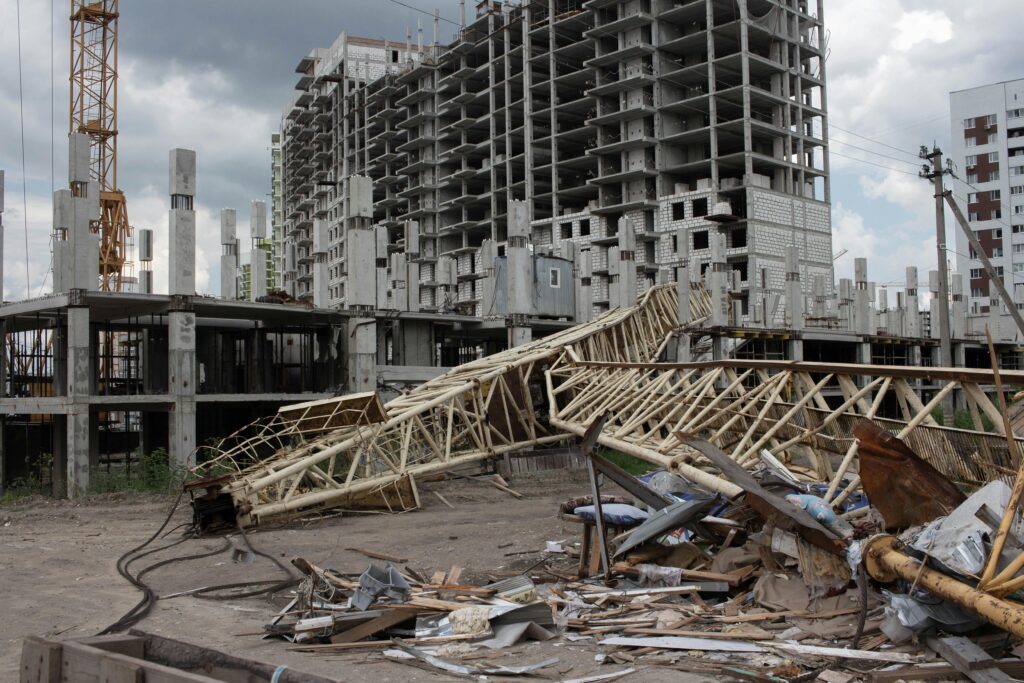
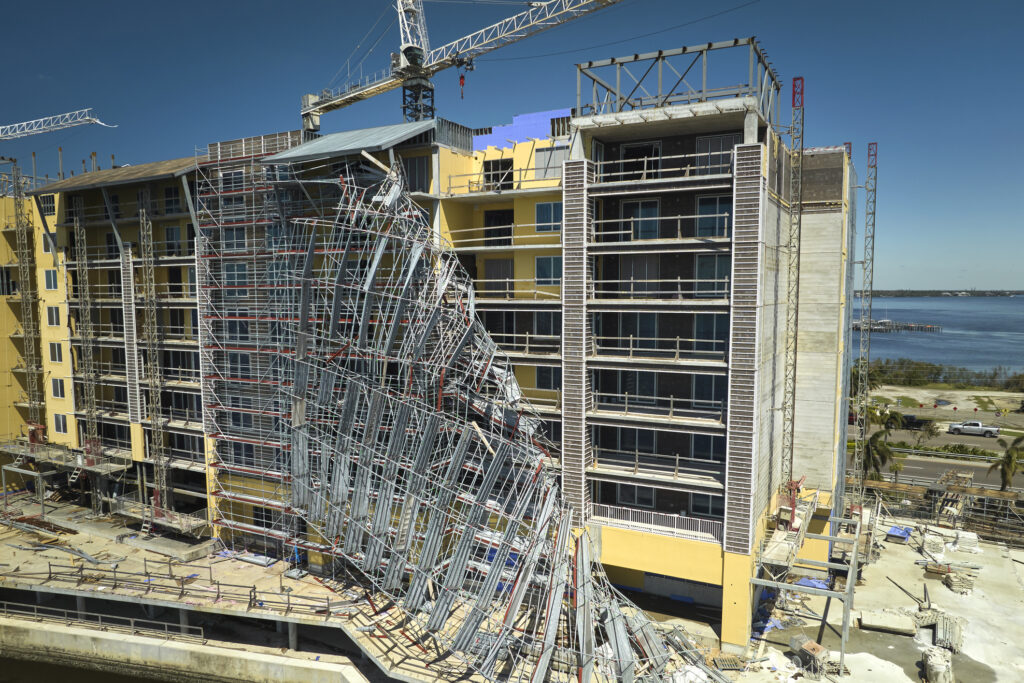
A scaffold accident refers to any unintended event causing injury, fatality, or property damage when scaffolding is involved during construction or building maintenance activities. Scaffolding accidents can involve multiple failure types and typically result in serious injuries due to the height factor involved.

Key terminology includes:

  • Scaffolding collapse: Complete or partial structural failure of scaffold systems
  • Fall protection: Safety systems designed to prevent or arrest falls from height
  • OSHA standards: Federal regulations governing scaffold safety (29 CFR 1926.451)
  • System failure: Breakdown of scaffold components, materials, or safety equipment

Scaffold accidents involve three main types of scaffolding:

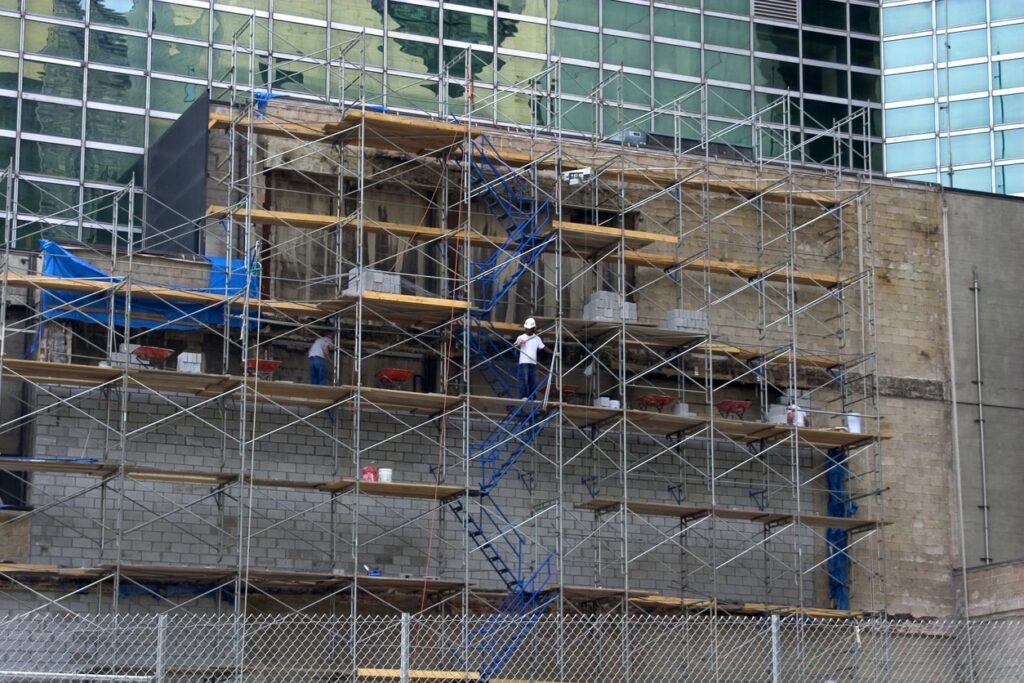
  • Supported scaffolds: Using poles, frames, and braces for ground support
  • Suspended scaffolds: Hanging from overhead anchor points
  • Mobile scaffolds: Wheeled systems that can be moved between locations

Accident Categories and Relationships

Scaffold accidents connect to broader construction safety and legal topics through a clear relationship chain: improper installation → system failure → worker falls → severe injuries → legal liability and workers’ compensation claims.

These accidents relate directly to:

  • Workers’ compensation law for injured workers
  • Personal injury lawsuits against negligent parties (in New York, Labor Law Section 240, known as the Scaffold Law, not only governs construction employers’ obligations to protect workers at heights, but it also gives those workers the right to seek compensation for any injury or death caused by a fall or an object that fell from a height)
  • OSHA compliance and occupational safety regulations
  • Construction site liability among contractors and employers (in New York City, Labor Law Section 240, known as the Scaffold Law, not only governs construction employers’ obligations to protect workers at heights, but it also gives those workers the right to seek compensation for any injury or death caused by a fall or an object that fell from a height)

Why Scaffold Accident Prevention is Critical in Construction

OSHA data reveals that falls cause 33% of all construction fatalities nationally, with scaffold-related falls representing a significant portion of these deaths. Research shows that about 25% of workers injured in scaffolding accidents sustain moderate to severe traumatic brain injuries, while many others suffer spinal cord injuries, broken bones, and internal injuries.

The financial impact extends beyond medical expenses:

  • Average workers’ compensation claims for scaffold accidents exceed $75,000
  • OSHA fines for scaffold violations can reach $136,532 per serious violation
  • Lost productivity and project delays create additional costs for employers
  • Personal injury lawsuits can result in settlements exceeding $1 million for severe injuries

Statistical analysis shows construction workers face five times higher fatality rates than workers in other industries, with scaffold accidents contributing significantly to this disparity. Companies that implement comprehensive scaffold safety protocols see accident rates drop by up to 40% according to safety administration studies.

Key Statistics and Accident Cause Comparison Table

Accident Cause CategoryPercentage of IncidentsCommon Injury TypesAverage Recovery TimeTypical Compensation Range
System Failures (Equipment defects, improper assembly)45%Broken bones, traumatic brain injuries6-18 months$50,000-$500,000
Human Factors (Inadequate training, safety protocol violations)40%Falls, lacerations, spinal injuries3-12 months$25,000-$300,000
Environmental Factors (Weather, falling objects)15%Multiple trauma, electrocution12+ months$100,000-$1,000,000+

Research indicates that over 70% of scaffold accidents involve human factors, while system failures account for the most severe injuries and fatalities.

Step-by-Step Guide to Preventing Scaffold Accidents

Step 1: Pre-Installation Safety Assessment

Before scaffold erection begins, conduct comprehensive safety evaluations:

  • OSHA inspection requirements: Ensure qualified personnel design scaffolds over 125 feet high
  • Foundation stability checks: Verify ground conditions can support scaffold loads plus four times the intended working load
  • Weather condition assessments: Postpone installation during high winds (over 25 mph) or severe weather
  • Component inspection checklist:
    • Examine all scaffold materials for defects or damage
    • Verify proper fall arrest systems are available
    • Confirm guardrails, platforms, and access ladders meet OSHA standards
    • Check that all safety equipment is properly certified

Step 2: Proper Installation and Safety Measures

Follow OSHA Subpart L compliance requirements during scaffold erection:

  • Structural integrity protocols: Properly brace and anchor scaffolds to prevent tip-over
  • Fall protection installation: Install guardrails, midrails, and toeboards on all platforms over 10 feet high
  • Safe access provisions: Provide proper ladders or stairways for worker access to scaffold platforms
  • Load capacity verification: Ensure scaffolds can support their own weight plus intended loads without failure

Recommended tools include certified torque wrenches for proper component assembly, fall arrest systems for each worker, and weather monitoring equipment for ongoing safety assessments.

Step 3: Ongoing Monitoring and Maintenance

Implement daily inspection protocols and documentation:

  • Daily safety inspections: Trained personnel must inspect scaffolds before each work shift
  • Weather-related procedures: Modify or suspend work during adverse conditions
  • Documentation requirements: Maintain inspection logs and incident reports
  • Performance metrics: Track near-misses, safety training completion, and accident rates

Monitor wind speeds, ice formation, and structural integrity continuously to prevent accidents before they occur.

Common Mistakes That Cause Scaffold Accidents

Inadequate worker training on scaffold safety protocols and fall protection: Many employers fail to provide comprehensive training on proper scaffold use, fall arrest systems, and hazard identification. Workers need specific training on the scaffolding they’ll use.

Using damaged or improperly maintained scaffold components without inspection: Continuing to use scaffolds with defective materials, missing guardrails, or damaged platforms creates immediate hazards that lead to collapses and serious injuries.

Ignoring environmental factors like wind, ice, and temperature changes: Weather conditions significantly affect scaffold stability. Failing to adjust work practices for environmental hazards results in preventable accidents.

Pro Tip: Implement daily safety briefings, mandatory fall protection use, and immediate reporting of unsafe conditions to avoid these fatal errors. Train all workers to identify and control hazards before they lead to accidents.

Workers’ Compensation Benefits for Construction Accidents

Construction workers who are injured on the job may be entitled to workers’ compensation benefits covering medical expenses, rehabilitation, and a portion of lost wages (up to two-thirds of salary in New York). Benefits may also extend to survivors in the event of a fatal accident. However, workers don’t always receive the full benefits they deserve, and some claims are denied outright. For this reason, it’s important to consult a construction accident lawyer if you’ve been injured on the job.

Additional Legal Options for Injured New York Construction Workers

Beyond workers’ compensation, injured construction workers in New York may have other legal remedies. Depending on the circumstances, they may pursue a personal injury lawsuit for additional compensation or a wrongful death claim on behalf of a loved one. New York’s Labor Laws provide further protections, allowing lawsuits in cases where unsafe workplace conditions or negligence by construction companies or property owners led to injury. A construction accident lawyer can help workers understand these laws and navigate the process to ensure their rights are fully protected.

Real-Life Scaffold Accident Case Study

Case Study: Bechtel Texas LNG Project Triple Fatality

In a devastating scaffold accident, three workers fell 65-85 feet when scaffolding failed during maintenance work on an LNG facility. The accident occurred despite the project’s established safety protocols being in place.

Project Setup and Initial Conditions:

  1. Workers were performing routine maintenance on elevated equipment
  2. A suspended scaffolding system was installed by certified contractors
  3. Fall arrest systems were available, but not properly utilized
  4. Weather conditions were within acceptable parameters

Safety Protocol Failures Leading to Collapse:

  1. Inadequate anchor point inspection failed to identify structural weaknesses
  2. Workers bypassed fall protection equipment due to perceived inconvenience
  3. The supervisor failed to enforce mandatory safety briefings
  4. Emergency response procedures were not immediately activated

Investigation Findings and Legal Consequences: The investigation revealed multiple OSHA violations, including inadequate fall protection, improper scaffold assembly, and insufficient training for workers. Legal outcomes included:

  • $2.8 million in OSHA fines for safety violations
  • Wrongful death settlements exceeding $15 million for families
  • Criminal charges filed against supervisory personnel
  • Company-wide safety protocol overhaul mandated

This case illustrates how multiple safety failures can combine to produce catastrophic consequences, underscoring the crucial importance of comprehensive accident prevention measures.

Contact the Law Office of Nicholas E. Tzaneteas

As experienced New York City, Bronx, Brooklyn, Queens, and Manhattan construction accident attorneys and a personal injury law firm, we can help victims of construction site injuries. Nicholas Tzaneteas has assisted injured clients in recovering millions of dollars in judgments and settlements.

FAQs About Scaffold Accidents

Q: Who is liable when a scaffold accident occurs on a construction site?

A: Multiple parties can be held responsible, including general contractors, scaffolding companies, employers, and individual workers, depending on negligence factors. Liability often depends on who failed to follow safety protocols, maintain equipment properly, or provide adequate training.

Q: What compensation can I receive after a scaffold accident injury?

A: Workers’ compensation covers medical bills and lost wages regardless of fault, while personal injury lawsuits may provide additional damages for pain and suffering against negligent third parties. Compensation varies based on the severity of the injury and its long-term impacts.

Q: How long do I have to file a claim after a scaffold accident?

A: Workers’ compensation claims must typically be filed within 30 days of the accident, while the time frame for personal injury lawsuits in New York is up to 3 years. Immediate action protects your legal rights.

Q: What are the most common injuries from scaffold accidents?

A: TBIs, spinal cord damage, broken bones, and internal injuries are typical results of scaffold falls and collapses. About 25% of scaffold accident victims suffer moderate to severe head injuries requiring extensive medical treatment.

Top Safety Practices to Prevent Scaffold Collapse on Construction Sites

We examine the primary reasons behind scaffold collapses, which are significant safety concerns on construction sites that can result in serious injuries or even death.

Understanding Scaffold Collapse on Construction Sites

Scaffold collapses remain a major issue in the construction industry, especially in New York City. These events can result in critical injuries or deaths, along with considerable damage to property. It is essential that scaffolding adheres to strict safety regulations from its design and construction through daily operation and regular assessments. Adhering to thorough safety procedures greatly diminishes the likelihood of accidents involving scaffolds at building sites.

Scaffold failures can be attributed to several underlying factors which must be vigilantly managed and counteracted. Mistakes made by humans, careless actions, environmental influences, as well as flaws in materials stand out as leading reasons for these types of incidents occurring. Recognizing what leads to these disasters paves the way for enacting robust measures geared toward enhancing scaffold security on job locations.

Human Error and Negligence

Improper assembly, insufficient training, and disregard for safety protocols frequently contribute to scaffold collapses due to human error. Poorly constructed or assembled scaffolding amplifies the danger of collapse, which can result in serious injuries to construction workers. Ensuring that those involved with scaffolding receive specialized instruction is crucial so they are well-versed in safety norms and correct construction methods.

To diminish the chances of accidents, it’s vital that adequately qualified professionals provide scaffold safety training. This enables workers on construction sites to spot potential risks promptly and implement measures to prevent them, thereby lowering the incidence of failures that could lead to collapses and worker injuries.

Environmental Factors

Adverse weather conditions, including strong winds and heavy rain, can negatively impact the stability of scaffolding. To counteract these environmental threats, it is crucial to take them into consideration during both the planning and assembly stages to guarantee scaffold stability.

It is essential that the foundation for any erected scaffold be stable enough to bear not only its own weight but also the additional load from workers and materials. Carrying out an exhaustive investigation of the site along with meticulous planning are key measures in reducing risks associated with environmental influences and ensuring a secure working area for all involved.

Material Failure

Material failure is another critical factor that can lead to scaffold collapses. Using defective or substandard materials compromises the integrity of the scaffolding, increasing the risk of accidents. High-quality materials are crucial to prevent failures and protect workers from injuries.

Inferior materials pose severe safety hazards, putting workers at significant risk of falling and suffering injuries or death. Prioritizing top-grade materials enhances structural integrity and safety.

Common Injuries from Scaffold Collapses

The collapse of a scaffold can lead to an array of injuries, spanning from trivial scrapes and contusions to severe, transformative health conditions. Such incidents stand as one of the primary sources of both injury and death within the construction industry. Not only do victims suffer physical harm when a scaffold fails, but they also experience significant emotional distress and economic burdens that deeply affect them and their loved ones. Addressing these challenges holistically is essential in providing thorough support to facilitate recovery.

Physical Injuries

Accidents involving scaffolds can lead to a range of severe physical harms, such as bone fractures, traumatic injuries to the head, and damage to the spinal cord that may cause paralysis. Frequent injuries involve broken bones in areas like wrists and ankles due to scaffold collapses. These types of injuries typically necessitate comprehensive medical care alongside extended periods for recuperation.

Catastrophic injuries encompass crush trauma when limbs or other body parts are pinned under substantial wreckage—occasionally resulting in amputation—and cuts from objects plummeting down which carry the threat of infection. The seriousness associated with these kinds of harm underscores the imperative nature of robust safety protocols and swift medical intervention following an accident where people become trapped by a collapsing scaffold.

Emotional and Financial Impact

Individuals affected by scaffold accidents frequently encounter a heavy load of medical expenses and income loss. The substantial economic demands stemming from healthcare costs and diminished earnings can lead to profound psychological anguish for both the victims and their family. Consequences such as physical harm coupled with monetary pressures may give rise to mental health issues like anxiety, depression, or post-traumatic stress disorder (PTS

To effectively tackle both emotional well-being and monetary hardships that follow scaffold-related mishaps, an all-encompassing strategy encompassing medical treatment, legal counsel, and mental health support is required. This integrated method is vital in assisting those impacted along their journey towards recovery while also aiding them in piecing back together their lives after such traumatic events.

Legal Steps After a Scaffold Collapse

Understanding the legal procedures following a scaffold collapse is crucial for victims to obtain the compensation they are entitled to. Available avenues such as filing for workers’ compensation claims or third-party lawsuits can greatly influence their journey towards financial recovery and provide necessary support.

It’s important to take prompt action after an accident, initiate the process of claiming compensation, and explore options regarding third-party responsibility in order to safeguard your rights and ensure that you receive adequate assistance in your recovery.

Immediate Actions Post-Accident

In the event of a scaffolding accident, assess any injuries immediately and obtain medical help. This step not only mitigates the risk of additional harm, but also secures records that may support subsequent claims. Capturing details about the scene is imperative for preserving evidence required in potential legal proceedings.

Notifying your employer about the incident sets off the formal process of documentation needed for insurance purposes. It serves as verification for injury reports and guarantees that all mandated reports are completed accurately.

Filing for Compensation

Following a scaffolding collapse, workers who sustained injuries are entitled to seek workers’ compensation and may also file third-party liability claims in New York City, depending on the circumstances. These claims can address an array of losses such as medical expenses, lost earnings, emotional suffering, and provide death benefits for relatives of any worker who has passed away due to the accident. Collecting statements from those who witnessed the event is vital in bolstering legal cases post-accident.

Pursuing Third-Party Liability Claims

After experiencing a scaffold collapse, it’s imperative to grasp your legal avenues as they can profoundly influence the trajectory of your recovery. Initiating compensation procedures may involve making claims against additional parties like contractors or manufacturers who are accountable for the scaffolding mishap. With an extensive history spanning over two and a half decades in dealing with grave injury cases, NTZ Law delivers robust yet empathetic advocacy to ensure clients are justly compensated.

To successfully file third-party liability claims, meticulous investigation and specialized legal knowledge is essential. The team at Law Offices of Nicholas Tzanateas (NTZ) stands ready to pinpoint those liable for the incident and forge a compelling argument that aims to procure the rightful restitution you merit.

How the Law Offices of Nicholas Tzanateas Can Assist You

NTZ Law provides specialized legal assistance to those affected by scaffold accidents, ensuring that their clients are adeptly represented in the pursuit of rightful compensation. The firm is dedicated to advocating for victims of such incidents with a vigorous commitment, offering expert guidance through the complex territory of personal injury law.

Expertise in NYC Personal Injury Cases

Boasting a quarter-century of expertise, NTZ Law is proficient in handling grave and devastating injury claims stemming from construction mishaps. Their profound experience affords them the capability to adeptly navigate scaffold-related accidents and achieve just recompense on behalf of their clients.

NTZ Law demonstrates its unwavering commitment to representing those harmed through its tailored approach to each situation they encounter. The firm’s prowess in personal injury legislation positions them favorably when addressing the specific challenges and details pertinent to claims involving scaffolding accidents.

Areas of Service

NTZ Law provides expert legal assistance to individuals impacted by scaffold accidents across the New York City region, covering all five boroughs—Brooklyn, Bronx, Manhattan, Queens, and Staten Island—as well as the neighboring counties of Westchester, Nassau, and Suffolk. This wide-ranging service territory guarantees that clients from various locations can receive professional legal support.

Preventative Measures to Avoid Scaffold Collapses

Preventing scaffold collapses ensures a safer building construction environment for the construction worker. Proper safety measures significantly reduce the risk of accidents and protect workers from harm.

Proper Training and Supervision

Thorough instruction for employees markedly diminishes the chances of accidents involving scaffolding. It’s crucial that these programs include instructions on how to properly erect, utilize, and respond in emergencies related to scaffolding. This ensures that workers are well-versed in safety measures and recognize the value of skilled oversight.

Having appropriate leadership onsite guarantees adherence to safety guidelines and swift management of any emerging risks. Skilled overseers have the ability to spot and rectify problems before they escalate into incidents, thus improving overall safety at the construction site.

Regular Inspections and Maintenance

Regular inspections of scaffolding are crucial to detect and correct possible dangers prior to the commencement of work. These routine checks assist in identifying any deficiencies, confirming adherence to safety regulations, and mitigating potential risks that could cause mishaps.

By conducting consistent evaluations, emerging problems can be resolved, upholding the structural soundness of the scaffold and securing a safer working space for construction workers.

Use of Quality Materials

Choosing top-tier materials for scaffold construction is crucial to mitigate the risk of structural collapse and improve safety measures. Materials such as steel and aluminum significantly boost the durability and security of scaffolding frameworks.

By investing in superior quality materials, you can ensure that scaffolds are robust enough to endure the rigors of construction while minimizing chances of failure. Emphasizing premium material selection during scaffold assembly is essential for safeguarding worker welfare and maintaining solid structure integrity.

Frequently Asked Questions

How many people fall off scaffolding?

Scaffold-related accidents result in approximately 60 deaths and 4,500 injuries annually, with falls accounting for about 25% of all fatal falls from working surfaces.

It is essential to prioritize scaffolding safety to mitigate these risks.

What is the #1 injury when using scaffolding?

Falling from scaffolding is the most common injury encountered when using this equipment, often leading to severe and potentially fatal injuries, especially from significant heights.

Prioritizing safety measures and proper training is essential to mitigate these risks.

What is scaffold collapse?

Scaffold collapse is a dangerous event that poses serious risks to construction workers and nearby individuals, occurring when these temporary support structures fail and compromise safety.

It is crucial to ensure proper inspection and maintenance to prevent such incidents.

What are the main causes of scaffold collapses?

The main causes of scaffold collapses are human error and negligence, environmental factors, and material failure.

Addressing these issues is vital to ensuring workplace safety.

What types of injuries can result from scaffold collapses?

Collapses of scaffolding may lead to a range of harm, from superficial wounds such as scrapes and contusions to more grave injuries including broken bones, cranial damage, spinal afflictions, and even life-threatening outcomes.

Implementing rigorous safety protocols is essential in averting these kinds of accidents.

Reducing Caught In or Between Hazards Related to Excavation Work

Safety measures are paramount any time a construction project requires digging. Caught-in or between hazards are related with excavations in construction work because workers can be trapped, crushed between heavy materials, machinery, or collapsing earth. Understanding these risks is essential for ensuring safety on excavation sites.

Understanding the Hazard: Key Considerations

Individuals can be caught or compressed between various objects leading to serious injury. This type of hazard, among other objects including cave-ins and interactions with equipment or heavy materials, poses significant risks within construction and excavation environments and is often the cause of critical accidents or even death. It’s essential to comprehend these dangers in order to establish robust safety protocols.

Instances where individuals may become trapped include trench collapses as well as entanglement in machinery operations during excavations. Such events are not rare and carry the potential for catastrophic outcomes. Excavation sites frequently present a high risk due to unfortified and unprotected trenches, which might abruptly collapse without any warning signs, possibly resulting in grave injuries or loss of life among workers.

Cave-ins specifically represent the greatest risk most severe threat associated with these hazards because they can quickly lead to an individual being fatally crushed or suffocated by soil and debris. Consequently, it is vital for those participating in digging activities to have comprehensive knowledge about identifying and minimizing such dangers meticulously. Every single hazard needs thoughtful consideration.

Common Excavation-Related Hazards

Work in excavations is fraught with danger, necessitating worker awareness of several prevalent hazards. Cave-ins stand out as the most serious threat in these situations, carrying a substantial risk of either crushing or suffocating those caught within. The unpredictable nature of such collapses underscores the critical need for safety measures during excavations.

Encounters with dangers where workers might get trapped can also occur due to machines without safeguards, open excavations left unprotected, and walls that collapse amid demolition activities. An added peril comes from heavy equipment that may tip over while being used for excavation work. This could result in severe crush injuries if a worker were to be ejected from such machinery. These risks represent actual challenges faced regularly by individuals working at excavation sites.

The atmosphere inside trenches can present its own set of perils, including exposure to poisonous gases which have the potential to cause chemical burns or even lead users toward asphyxiation. There is also a grave concern for trench drownings when they become filled with water, sewage, or hazardous chemicals—underscoring another aspect of how dangerous excavation efforts can be. Recognizing these risks paves the way forward toward discussing methods to curb them effectively.

Risks to Life and Limb

Caught-in or between hazards, like cave-ins, pose significant risks in construction and excavation projects. These hazards occur when a worker’s body is trapped, crushed, or compressed between objects or materials. Here are some common risks associated with these hazards:

  1. Crushing and Asphyxiation: When a trench or excavation site collapses, workers can be quickly engulfed by soil or debris, causing crushing injuries or asphyxiation due to the weight and pressure of materials.
  2. Traumatic Injuries: Workers caught between moving equipment or heavy materials can suffer severe injuries, such as broken bones, internal injuries, or amputations.
  3. Falling or Sliding Material: Improperly stacked or secured materials can shift or slide, trapping workers beneath or between heavy objects, especially when equipment like cranes or forklifts is involved.
  4. Unstable Soil Conditions: Poor soil stability and lack of protective systems can lead to unexpected cave-ins, trapping workers who are in or around the excavation area.
  5. Equipment Malfunctions: Mechanical failures of heavy machinery used for lifting or moving materials can result in accidents where workers are caught between malfunctioning parts or in unintended load drops.
  6. Limited Escape Routes: In excavation sites or narrow spaces, workers may have limited escape routes if a collapse or other accident occurs, making rescue efforts difficult and increasing the risk of injury or fatality.
  7. Lack of Visibility: In busy construction zones, especially where equipment is moving in and out of narrow spaces, workers may not be visible to operators, heightening the risk of being caught or struck.

Mitigating these risks typically involves using protective systems (like trench boxes and shoring), clear communication, proper use of machinery, and strict adherence to safety protocols and OSHA guidelines for excavation and trenching safety. Regular training and situational awareness also play crucial roles in preventing caught-in or between incidents.

Preventive Measures for Excavation Sites

Implementing preventative strategies at digging locations is vital for reducing the dangers of hazards related to being caught in or between objects. These actions safeguard employees and align with mandatory legal standards.

Employers are legally obligated to maintain a safe work environment, adhering strictly to OSHA regulations aimed at protecting laborers from intense perils. Should an employer fail to report workplace fatalities or grave injuries as required by OSHA, they may face serious legal repercussions.

To minimize the incidence of workers being trapped in or between hazardous zones, protective steps can be taken including adequately securing equipment and verifying load stability.

Protective Equipment and Safety Gear

To protect and enhance safety during excavation work, it is crucial to utilize appropriate protective gear and equipment. Trench boxes serve as a critical safeguard by offering stability and shielding workers from the threat of a cave in and-ins. The deployment of these structures plays an essential role in averting soil collapses, thus providing vital protection for individuals engaged in digging activities.

Avoid Wearing Loose Clothing

Workers are advised against wearing loose garments that could become entangled while operating near heavy machinery or within excavation zones. Such attire significantly increases the risk of severe injury resulting from becoming ensnared by unshielded or poorly serviced machines. Maintaining tight-fitting clothing can help circumvent such hazards.

In order to maintain optimal safety levels and reduce exposure to potential dangers at sites where earth-moving occurs, employing suitable protective measures is indispensable. This approach ensures the wellbeing of those present on-site by lessening the risks associated with excavation endeavors.

Employee Training

Establishing secure work practices is essential for guaranteeing safety within excavation sites. By providing workers with appropriate training regarding the dangers associated with excavations and instructive safety measures, the occurrence of mishaps can be greatly minimized. Such education allows workers to become well-versed in following safety protocols and identifying imminent risks.

Monitoring Underground Utilities

To mitigate the risk of utility-related incidents, it is imperative to accurately detect and demarcate underground utilities prior to commencing any digging activities. The establishment of clear markings for these subterranean services is a crucial step in safeguarding infrastructure from harm while diminishing the likelihood of accidents associated with unintended utility strikes.

It’s essential that before breaking ground, procedures are undertaken to pinpoint the positions of buried underground utilities. This serves as a pivotal measure in steering excavation projects away from unforeseen disruptions, thereby preserving both structural integrity and safety by significantly lowering the chances of mishaps linked to the underground utilities and facilities.

Calculating Loads Carried by Scaffolds

In construction scaffolding, “loads carried” refers to the total weight or force that a scaffold structure is designed to support safely. This includes not only the weight of the scaffolding materials themselves but also the weight of workers, equipment, materials, and any additional forces or loads that may be placed on it during use. Loads carried are typically classified into three main categories:

  1. Dead Load: The weight of the scaffolding components themselves, including frames, planks, and braces. This load is constant and doesn’t vary over time.
  2. Live Load: The weight of all additional items placed on the scaffold, such as workers, tools, and materials. This load can vary significantly depending on the tasks being performed on the scaffold.
  3. Environmental Loads: External forces, like wind or debris, that can impact scaffolding stability, especially on higher or more exposed projects.

The capacity of large scaffolds to handle these loads safely is critical for preventing accidents, ensuring stability, and complying with safety regulations. Proper load calculations and load testing are essential for safe scaffold setup and operation on construction sites.

Legal Considerations in Case of Injury or Death

Adhering to OSHA guidelines is crucial for safeguarding those involved in excavation work, which encompasses the implementation of protective measures and adherence to precautionary practices. Responsibility for injuries or fatalities may fall on a range of entities including contractors and manufacturers of equipment. Intensive investigation into accident reports is typically required in legal proceedings related to excavation accidents, with the goal of pinpointing culpability and gauging the extent of injuries incurred.

Consultation with a legal expert following an incident at work ensures that your interests are upheld while addressing the intricacies associated with claims pertaining to workers’ compensation. It’s vital that injured employees seek prompt treatment from approved medical practitioners as this forms part of ensuring eligibility for workers’ compensation benefits. Attorneys adept in workplace injury law play an instrumental role in securing just compensation covering healthcare costs, lost earnings, and other repercussions stemming from occupational mishaps.

How to Seek Legal Help

Workers who have suffered serious injuries through caught-in or between hazards may be entitled to additional compensation beyond the typical workers’ compensation if their conditions are deemed severe. The Law Offices of Nicholas Tzanateas focuses on work-related injuries, boasting more than two decades of expertise in handling personal injury lawsuits throughout New York City’s boroughs, including Brooklyn and Manhattan. The law firm has managed numerous cases involving excavation-related harm.

Frequently Asked Questions

What are caught-in or -between hazards?

Hazards that involve the danger of individuals being trapped or compressed between multiple objects, including machinery, materials, or as a result of cave-ins, present considerable risks to safety.

To reduce these dangers in the workplace, it is crucial to employ adequate safety measures.

What are the common causes of caught-in or -between hazards in excavation work?

Caught-in or -between hazards in excavation work commonly arise from unguarded machinery, or unprotected trench excavations, collapsing walls, and heavy equipment tipping over.

It is crucial to address these risks to ensure worker safety.

What preventive measures can be taken to mitigate these hazards?

To reduce the risks associated with these dangers, it is critical to adopt precautionary steps. This includes employing trench boxes for protection, providing thorough training to workers, prohibiting the wear of loose clothing that could pose a risk, and carrying out consistent safety inspections while keeping a watchful eye on underground utilities.

Such measures are instrumental in substantially improving the safety conditions at work sites.

What should I do if I am injured in an excavation accident?

If you are injured in an excavation equipment accident, seek immediate medical attention and notify your employer in writing within 30 days.

It is also advisable to consult an experienced attorney to understand your rights and options.

How can The Law Offices of Nicholas Tzanateas help with excavation-related injury cases?

With more than 25 years of expertise in personal injury law, the Law Offices of Nicholas Tzanateas are well-equipped to help clients with injuries related to excavation secure compensation for medical costs, lost income, and additional damages.

The firm’s focus on severe work-related injuries guarantees that clients obtain the committed assistance necessary during such difficult times.

Construction Scaffolding: Legal Considerations and Safety Measures

Construction scaffolding is a vital component of any building project, providing essential support and access for workers and materials. However, it also poses significant risks if not properly managed. Understanding the legal considerations and safety measures is crucial to prevent injuries or fatalities on-site.

Construction Work: Key Considerations

  • Scaffolding in construction is a critical temporary structure that ensures safe access for workers and materials, particularly in projects involving heights.
  • Adhering to safety standards, regular inspections, and innovative technologies in scaffolding is essential for preventing accidents and ensuring a productive work environment.
  • Legal implications can arise if scaffolding accidents occur, making it imperative for construction companies to comply with Occupational Safety and Health Administration (OSHA) regulations.

Understanding Scaffolds in Construction

Scaffolding construction involves erecting temporary structures that provide secure and stable access for workers performing tasks at elevated heights. This setup not only supports personnel but also facilitates material handling, promoting efficiency and safety on construction sites. Wooden scaffolding, for example, spans distances and minimizes worker movement time, proving indispensable for tall structures or areas with accessibility challenges.

A Temporary Structure: Types of Scaffolding Systems

For nearly every construction project, a temporary structure known as a scaffold may be used. A scaffold consists of numerous parts and can take several forms, including:

Trestle Scaffolding

  • Description: Trestle scaffolding involves a framework that rests on movable tripods or ladders, making it suitable for tasks done at lower heights.
  • Use Cases: Ideal for interior work, such as painting and minor repairs, where height requirements are minimal.
  • Advantages: Simple to set up and lightweight, making it easy to transport and adjust within small or confined areas.
  • Limitations: Not suitable for high or heavy-duty work, as it is designed for lower height tasks (usually up to 5 meters).

Bamboo Scaffolding

  • Description: Bamboo scaffolding, traditionally used in parts of Asia, is a framework made from bamboo poles tied together, often using plastic or natural ropes.
  • Use Cases: Primarily used in regions where bamboo is readily available, and it’s known for being lightweight, flexible, and environmentally friendly.
  • Advantages: Bamboo is sustainable, cost-effective, and surprisingly strong, with a high strength-to-weight ratio. Skilled workers can assemble bamboo scaffolding quickly.
  • Limitations: It may not meet the stringent safety standards required in some regions, particularly where heavy loads or extreme heights are involved, as it requires skilled handling and regular maintenance.

Steel Scaffolding

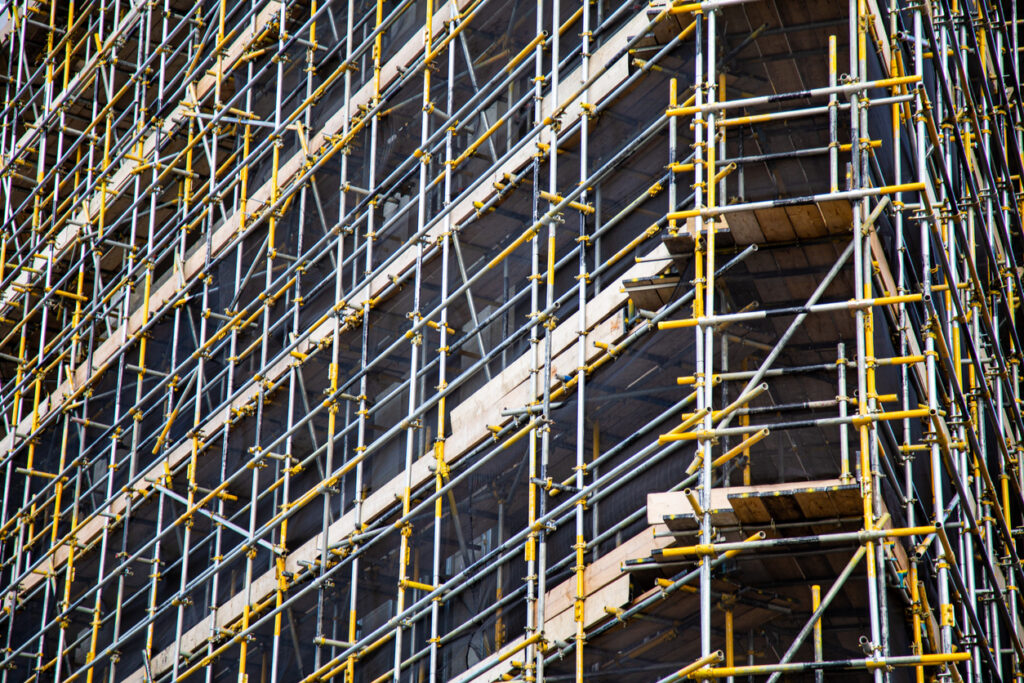
  • Description: Steel scaffolding consists of steel tubes connected by couplers or fittings, forming a sturdy, durable framework.
  • Use Cases: Preferred for heavy-duty construction, particularly on larger buildings and at higher elevations.
  • Advantages: Steel scaffolding offers superior strength and durability, making it ideal for supporting heavy loads and providing stability. It is also fire-resistant and weather-resistant, which increases its lifespan.
  • Limitations: Heavier and more expensive than other materials, and it requires skilled labor for assembly and disassembly. Steel also needs protection from rust if used outdoors in certain climates.

Sectional Scaffolding

  • Description: Sectional scaffolding, also known as modular or prefabricated scaffolding, consists of pre-engineered sections that can be easily assembled and disassembled.
  • Use Cases: Widely used in construction for both exterior and interior projects, as well as for maintenance work in industrial settings.
  • Advantages: Sectional scaffolding is versatile, with parts designed to lock securely into place. Its modular nature allows for quick assembly, easy transport, and the ability to adapt to varying site conditions.
  • Limitations: While flexible, the pre-engineered sections may limit custom configurations needed for some complex structures. Additionally, costs can vary based on material and brand.

Suspended Scaffolding

  • Description: Suspended from the top of a building via ropes or cables, allowing height adjustment as needed.
  • Uses: Ideal for high-rise tasks like window cleaning, painting, and maintenance where ground support isn’t feasible.
  • Pros:
    • Adjustable Height: Easily raised or lowered.
    • Space Efficient: Doesn’t require ground support, great for narrow spaces.
    • Cost-Effective: Minimal material compared to full-height ground scaffolds.
  • Cons:
    • Safety Risks: Requires strict safety protocols due to suspension.
    • Weather Limitations: High winds or storms can halt work.

Cantilever Scaffolding

  • Description: Supported on one end, extending outwards using beams (needles) anchored to the building.
  • Uses: Used above obstacles or in areas where ground scaffolding isn’t possible.
  • Pros:
    • Great for Constrained Spaces: Effective above busy streets or overhangs.
    • Customizable: Adapts to unique building features.
  • Cons:
    • Complex Setup: Requires precise engineering for stability.
    • Higher Costs: Specialized setup increases cost.
    • Safety Risks: Stability can be an issue if not properly anchored.

Each scaffolding type has specific benefits and is suited to particular types of projects. The choice of scaffolding often depends on project height, load requirements, budget, and safety regulations. Whether your construction project requires supported scaffold component installation or a more supportive trestle scaffolding, understanding the potential risks can help business owners and construction employees avoid harm.

Legal Considerations in Scaffolding Accidents

When scaffolding accidents occur, legal repercussions can be severe. Construction companies must adhere to OSHA regulations, which mandate that scaffolding must support its own weight plus at least four times the maximum intended load. Failure to comply can lead to legal action if someone is injured or killed.

Liability and Compliance

Construction firms are responsible for ensuring that scaffolding is erected, used, and dismantled in compliance with safety standards. If negligence is proven, companies may face lawsuits, fines, and reputational damage. Proper documentation and adherence to safety protocols are essential in mitigating legal risks.

Worker Compensation and Legal Rights

In the event of an injury or fatality, affected workers or their families may be entitled to compensation. Understanding legal rights and available recourse is crucial for construction workers. Employers must provide adequate training and safety equipment to minimize risks and protect themselves from potential legal claims.

Safety Standards and Regulations

Safety standards and regulations are essential for maintaining safe scaffolding sites. They cover issues from load capacities to safety barriers, with worker safety being the primary concern.

Approximately 65% of construction workers use scaffolds regularly, contributing to about 4,500 annual injuries. Adhering to safety standards and regulations minimizes these risks and ensures a safe working environment.

OSHA Guidelines

Safety regulations stipulated by OSHA mandate that scaffolding must be capable of carrying not only its own weight but also at least four times the maximum load it is intended to hold. To safeguard workers from fall hazards, employers are required to supply appropriate safety gear such as harnesses and lanyards, as well as implement protective barriers like guardrails and toeboards.

To avoid mishaps involving scaffolding, comprehensive training on its erection, utilization, and dismantling is vital for all involved personnel. Seeking advice from an expert can offer valuable insights while ensuring adherence to established safety standards. Conducting routine inspections and abiding by OSHA guidelines plays a critical role in preserving workplace safety for those working with or around scaffolding.

Understanding the legal considerations and safety measures associated with construction scaffolding is crucial for preventing accidents and ensuring compliance with regulations. By prioritizing safety and adhering to legal standards, construction companies can protect their workers, avoid legal repercussions, and maintain a safe and productive work environment.

Is Your Construction Project Safe?

As a construction company owner, ensuring scaffolding safety involves a combination of regular inspections, adherence to safety standards, and proactive maintenance. Here’s a checklist to help you keep your scaffolding safe and free from defects:

  1. Daily Inspections: Have a competent person inspect scaffolding daily before work begins, checking for any damage, loose components, or wear. Inspections should also occur after any incident, high winds, or extreme weather.
  2. Compliance with Safety Standards: Follow OSHA (Occupational Safety and Health Administration) or local safety standards, which specify load limits, guardrails, access points, and other essential requirements. Meeting these standards ensures the scaffolding is structurally sound.
  3. Routine Maintenance and Repairs: Immediately repair any signs of wear, corrosion, or defects. Maintain a log of all repairs, maintenance, and adjustments to track scaffold safety history.
  4. Proper Assembly and Dismantling: Ensure trained and experienced workers handle scaffolding assembly and dismantling according to manufacturer guidelines. Improper setup is a leading cause of scaffold failures.
  5. Weight Limits and Load Management: Adhere to weight limits specified by the scaffolding manufacturer, including workers, tools, and materials. Overloading scaffolding can lead to structural instability.
  6. Safety Training for Workers: Train workers on proper scaffold use, safety practices, and emergency procedures. They should be familiar with recognizing hazards and using personal protective equipment (PPE) appropriately.
  7. Regular Third-Party Inspections: For additional assurance, consider having periodic inspections by a third-party safety expert to identify potential issues that may be overlooked during routine checks.
  8. Documentation and Record-Keeping: Keep detailed records of all inspections, maintenance, and certifications. Documentation is key for both safety compliance and liability protection.

These steps will help ensure your scaffolding is secure, reducing risks for both employees and bystanders.

Hurt in a Construction Work Accident? Call the Law Office of Nicholas E. Tzaneteas Today

If you are a construction worker, you know that scaffolds are part of nearly every job site. Whether you have to deal with suspended scaffolding, cantilever scaffolding, or steel scaffolding and the assorted cross braces and steel tubes that go into those temporary structures, the risk of severe injury looms large over the site.

If you or someone you love has been injured in a scaffolding accident on a job site, call the Law Office of Nicholas E. Tzaneteas today. As an experienced personal injury attorney, Mr. Tzaneteas can help you protect your rights as you seek fair compensation for your injuries and lost wages. Commercial projects are the source of hundreds of claims in the New York City area every year; take control over your rights if you were injured through no fault of your own.

Frequently Asked Questions

What are the main legal considerations for scaffolding in construction?

The main legal considerations include compliance with OSHA regulations, ensuring scaffolding can support the required load, and providing adequate safety training and equipment to workers.

How can construction companies mitigate legal risks associated with scaffolding?

Construction companies can mitigate legal risks associated with scaffolding by implementing a comprehensive safety and compliance strategy. This involves several key actions:

Adherence to Safety Standards

Ensuring compliance with OSHA regulations and other relevant safety standards is paramount. This includes verifying that scaffolding systems are capable of supporting their own weight plus at least four times the maximum intended load. Regular updates on safety standards and integrating them into daily operations can significantly reduce legal risks.

Regular Inspections and Maintenance

Conducting routine inspections and maintenance of scaffolding structures is crucial to identify and rectify potential hazards. Inspections should be thorough, covering all scaffold components such as cross braces, vertical posts, and base plates. Documenting these inspections can serve as evidence of proactive safety measures in the event of legal scrutiny.

Comprehensive Training Programs

Providing comprehensive training for construction workers on the proper erection, use, and dismantling of scaffolding is essential. Training should cover the use of safety equipment, recognition of potential hazards, and emergency response procedures. Well-trained workers are less likely to be involved in accidents, thereby reducing legal liabilities.

Detailed Documentation and Record-Keeping

Maintaining thorough documentation of all safety protocols, training sessions, and inspection reports is critical. This documentation can protect companies from potential lawsuits by demonstrating a commitment to safety and compliance. It also aids in identifying areas for improvement in safety practices.

Implementation of Advanced Safety Technologies

Incorporating innovative safety technologies, such as digital monitoring systems and automated inspection tools, can enhance safety measures. These technologies provide real-time data on scaffold integrity and worker safety, allowing for prompt intervention if issues arise.

By prioritizing these actions, construction companies can effectively mitigate legal risks, protect their workers, and maintain a safe and compliant work environment.

What should workers do if injured in a scaffolding accident?

In the unfortunate event of a scaffolding accident, workers should prioritize their health and safety by seeking immediate medical attention to address any injuries sustained. Prompt medical evaluation is crucial not only for health reasons but also for documentation purposes, which can be vital in any subsequent legal proceedings.

Once medical needs are addressed, workers should report the incident to their employer as soon as possible. This report should include detailed information about the accident, including the time, location, and circumstances surrounding the incident. Accurate reporting helps ensure that the incident is properly documented and investigated, which is essential for both health and safety compliance and potential insurance claims.

Understanding legal rights is another critical step. Workers may be entitled to pursue compensation for medical expenses, lost wages, and other damages resulting from the accident. It is advisable for injured workers to consult with a legal professional who specializes in workplace injuries to explore their options for compensation. This may involve filing a workers’ compensation claim or pursuing other legal avenues if negligence is a factor.

Additionally, workers should cooperate with any investigations conducted by their employer or relevant safety authorities, such as OSHA, to help determine the cause of the accident and prevent future occurrences. By taking these steps, injured workers can protect their health, assert their rights, and contribute to a safer working environment for all construction workers.

Scaffolding Safety Failures: Legal Recourse for Construction Workers

According to a report by the New York City Department of Buildings (DOB), construction fatalities can occur on job sites of any size, with the majority occurring on larger and more complex projects. Most worker injuries and deaths are from falls on large construction job sites, including from scaffolding. In fact, nationwide each year, about 4,500 workers suffer scaffolding injuries, with more than 50 dying as a result, according to the Department of Labor.

Due to the increasing number of injuries on larger sites, the DOB conducted upwards of 50% more unannounced monitoring inspections in 2022 than the previous year. The DOB conducts over 300,000 construction inspections annually.

Unfortunately, many worker injuries and deaths from falls are due to employers’ not adhering to federal OSHA (Occupational Safety & Health Administration) regulations. OSHA requires employers – general contractors and project owners – to provide fall protection equipment and maintain guardrails, hole coverings, and other fall protection measures at all times. OSHA also has specific regulations for scaffolding safety.

A Close Look at OSHA Regulations for Scaffolding Safety

There are many OSHA scaffolding requirements and best practices for employers to follow to
ensure worker safety. They include the following:

  • Employers must provide fall protection equipment for every worker on scaffolding more than 10 feet above a lower level.
  • The scaffolding must be structurally sound and sturdy enough to support its weight plus four times the maximum intended load. It should do all of this without settling or any displacement whatsoever. Scaffolds should be set up on completely solid footing.
  • Unsteady objects, such as loose bricks, boxes, barrels, etc., should never be used to support planks or scaffolds.
  • A knowledgeable person must supervise workers as scaffolds are erected, dismantled, moved, or altered in any way.
  • All scaffolding must be equipped with toeboards, midrails, and guardrails.
  • Brackets, braces, screw legs, trusses, or ladders should be routinely examined. Any weak or damaged equipment should be replaced or repaired immediately.
  • Scaffolding platforms should be tightly planked. Ensure scaffold plank grade material or equivalent is used.
  • A designated and certified “knowledgeable person” must inspect all scaffolding. The scaffolding must be re-inspected at predetermined intervals.
  • Rigging on all suspension scaffolds must undergo inspection and should occur before each shift, as occasionally the structural integrity of suspension scaffolding becomes compromised and is not safe. Connections should be tight. Absolutely no damage should occur within the rigging.
  • Natural or synthetic rope involved in the suspension scaffold setup should be monitored. It needs to be protected from nearby heat-producing machinery and other sources.
  • Employees must be trained about the hazards of using diagonal braces for fall protection.
  • Scaffolding may be accessed by way of stairwells and ladders. Do not access via unsteady objects.
  • Scaffolding must always rest at least 10 feet from electrical power lines.

When Safety Regulations Are Ignored, Injuries Happen

Based on our years of experience representing construction workers injured on job sites, the Law Office of Nicholas E. Tzaneteas finds the following common causes behind scaffolding accidents.

Improperly Erected Scaffolding

Accidents occur when scaffolding has improperly secured planking, loose guard rails, or worn connection hardware. If not correctly erected and inspected, scaffolding is prone to failure and exposes workers to injuries from falls.

Objects Falling from Scaffolding

All tools, construction equipment, and materials should be adequately secured when working on elevated scaffolds. A large object dropped from even a short height can generate enough momentum during the fall to cause significant harm if it impacts a ground-level construction worker. Construction businesses that fail to install proper retaining straps and other measures may be considered negligent if their failure is the direct cause of a dropped object that strikes and injures a construction worker.

Electric Shocks from Contact with Power Lines

Metal scaffolding transmits electricity. Construction sites may not always have the option of placing scaffolding far away from power lines. Still, if such a risk exists, managers must take extra care to protect scaffolding from unintentional contact with such lines. Workers on those scaffolds will face much higher electrocution risks if the metal scaffolding serves as a grounding path for an electrical arc.

Inadequate Crew Training in Scaffolding Use

Construction firms should provide frequent training sessions for their crew on properly performing construction job activities on scaffolding, including the best techniques for securing safety harnesses and climbing up and down scaffolds. Construction workers who do not obtain proper training put themselves and their co-workers at risk.

Legal Options for NYC Construction Workers Injured While Working on Scaffolding

Construction workers injured on a construction site are entitled to receiving Workers’ Compensation benefits, which will pay for lost wages up to a certain amount, medical treatment, rehabilitation, and ongoing medical expenses.

In addition, New York has a series of laws to protect construction workers resulting from workplace negligence on the part of the construction firm and property owner, including Labor Law Section 240, known as the “Scaffolding Law.” This law requires employers to provide scaffolding that can support at least four times the total weight of all workers and equipment that will work at heights. In addition, all scaffolding taller than 20 feet from the working surface must also have a securely attached safety rail that runs along the supported platform’s entire length. The whole apparatus must be fastened so that it cannot become unstable, collapse, or tip over.

Under New York City law, general contractors who provide scaffolding for their workers must also provide personal protective equipment (PPE), such as fall protection gear, and train their employees on general scaffold safety and the correct use and maintenance of their PPE.

The Scaffolding Law governs construction employers’ duty to protect workers at heights and grants those workers the right to claim compensation for any injury or death caused by a fall or an object falling from a height.

Call the Law Office of Nicholas E. Tzaneteas

The Law Office of Nicholas E. Tzaneteas can help victims of construction site injuries. As experienced New York City, Bronx, Brooklyn, Queens, and Manhattan construction accident attorneys and personal injury law firms, we have helped injured clients recover millions of dollars in judgments and settlements.

If you or a loved one had a workplace accident in NYC and suffered an injury through no fault of your own, you may be eligible for substantial financial compensation for medical bills, lost wages, and pain and suffering. You may be entitled to Workers’ Compensation insurance benefits and damages due to negligence from the liable parties.

We know the New York Labor Laws inside and out and have secured construction accident settlements for our clients from parties responsible for the accident.

Electrical Safety in Construction: Legal Aspects of Electrical Injuries

The leading causes of construction deaths, according to the Occupational Safety and Health Administration (OSHA), are falls, being struck by equipment, being caught between objects, and electrocutions. These “Fatal Four” hazards account for 65% of all construction-related deaths, according to OSHA. In 2022, 1,069 construction workers nationwide died while on the job. The Centers for Disease Control and Prevention (CDC) reports electrocutions are responsible for 7.2% of work-related deaths in construction.

Common Causes of Electrocution Injuries and Fatalities on a Construction Site

An electrical accident on a construction site can occur due to the following:

  • The use of unsafe tools and defective equipment
  • Equipment malfunction
  • Fallen power lines
  • Exposed electrical parts and wires
  • Improperly grounded wires
  • Overloaded circuits
  • Indirect contact with live electrical equipment and wiring (including light fixtures, circuit breakers, control panels, junction boxes, and transformers)

Common Electrical Injuries

Electrical currents can cause severe internal and external injuries. While external injuries are easily visible, internal injuries can be fatal and should be recognized and treated as soon as possible. A construction worker’s electrical injuries are based on various factors, including the voltage of the current, the worker’s overall health, the amount of current flowing through the body, and the duration of electrical current exposure.

If the voltage increases beyond 500 volts, a construction worker can suffer severe injuries, including:

  • Burns: Serious burns can destroy multiple layers of skin and tissue, necessitating painful treatment such as dead tissue removal and skin grafting. Burns can also result in disfigurement.
  • Organ Damage: An electrical current can cause burns and damage to internal organs, including the heart. Following an electrical accident, seeking immediate medical attention is critical to detect any potential internal injuries.
  • Brain Damage: Electrocution can cause brain damage, including seizures, depression, shock, and lasting cognitive impairment.
  • Vision or Hearing Loss: Some construction workers may experience vision or hearing loss. Even if individuals do not entirely lose their sensory faculties, they may experience a partial loss.
  • Broken Bones: Electrocution can lead construction workers to fall from a high height. As a result, they may sustain additional traumas when they fall to the ground, including concussions, spinal cord injuries, fractures, and organ damage.

Other electrical injuries include muscle, nerve, and tissue damage from current passing through the body, numbness or tingling (often due to nerve damage), seizures, muscle spasms and pain, and problems with swallowing.

Preventing On-the-Job Electrocution Incidents

Several of the following measures will help prevent electrical injuries and fatalities on construction sites:

  • Compliance with OSHA electrical safety regulations
  • Electrical safety training for all employees
  • Properly maintained equipment
  • Advance contact with utility companies to de-energize or insulate overhead power lines; working on live electrical circuits/parts only under a permit system with specific procedures
  • Appropriate personal protective equipment
  • Proper tool usage when de-energizing or testing live electrical circuits/parts or otherwise working live
  • Properly grounded/double-insulated machinery and power tools

Who Is Responsible for Electrical Safety on a NYC Construction Jobsite?

If you’ve been in an accident on a job site and suffered an electrical injury, you may be entitled to compensation from several sources. Workers’ Compensation will pay for medical treatment and benefits for lost wages and disability.

You may also be entitled to additional compensation through a third-party lawsuit. If a third party, like a subcontractor, was negligent or you have a product liability case for defective equipment, you may seek a monetary award beyond Workers’ Compensation. Claims can include your pain and suffering, mental anguish, personal losses, and lost earnings over and above the Workers’ Compensation cap.

In addition, you may recover compensation for your pain, suffering, anguish, and other personal losses under New York Labor Laws 200 and 241, which protect construction workers by holding owners and general contractors liable for many violations. Labor Law 200 requires owners and general contractors to provide a reasonably safe workplace by shielding workers from dangers and hazards within their control. Labor Law 241 requires employers to provide adequate safety equipment to construction workers.

Contact the New York City, Bronx, Brooklyn, Queens, and Manhattan Law Offices of Nicholas E. Tzaneteas

The Law Office of Nicholas E. Tzaneteas can help victims of construction site injuries. As experienced New York City, Bronx, Brooklyn, Queens, and Manhattan construction accident attorneys and a personal injury law firm, we have helped injured clients recover millions of dollars in judgments and settlements.

If you or a loved one had a workplace accident in NYC and suffered an injury through no fault of your own, you may be eligible for substantial financial compensation for medical bills, lost wages, and pain and suffering. You may be entitled to benefits under Workers’ Compensation  insurance and damages from the liable parties due to negligence. An experienced construction accident attorney can help you evaluate your legal options for recovering damages from those who may be responsible. Call Nicholas E. Tzaneteas to help you navigate your claim.

Legal Implications of Demolition Accidents: Understanding Your Rights

Demolition-related construction accidents often involve explosives and other powerful demolition equipment. The resulting accidents frequently cause fatality or severe bodily injury, leaving construction workers unable to work and the potential for years of pain and suffering.

For example, according to workplace accident data compiled by the U.S. Bureau of Labor Statistics
(BLS), a total of 78 construction workers were killed in demolition accidents throughout the country in 2020. In 2019, demolition accounted for around 8% of construction-related accidents in New York City, ranking third only to worker falls and material failures.

According to the Occupational Safety and Health Administration (OSHA), demolition is the process
of dismantling, razing, destroying, or wrecking a building or structure or any component of it.

Three Types of Demolition

  • Deconstruction involves manual labor to systematically dismantle a structure piece by piece, allowing for recycling and reuse of materials but requiring more time and safety precautions.
  • Mechanical demolition uses heavy machinery to pull or push the structure down, resulting in a faster process, although it involves the risk of falls and crush injuries.
  • Implosion is utilized for large structures in populated areas, employing strategically placed explosives to collapse the building safely within seconds while minimizing damage to the surroundings. It necessitates collaboration between explosives experts and building designers for safe execution.

Many of the same hazards exist with demolition work as with general construction. However,
additional risks due to unknown circumstances make demolition operations very dangerous,
including:

  • Changes to the structure’s design during construction
  • Approved or unapproved alterations that affect the original design
  • Hidden materials, including lead, asbestos, silica, and heavy metals that require particular treatment
  • Unknown strengths and weaknesses in construction materials, such as post-tensioned concrete

Common Causes of Accidents During Demolition Work

OSHA cites several examples of demolition accidents to illustrate the dangers of this type of work, including a demolition worker who was impaled by rebar, a construction worker electrocuted during demolition operations, and an employee on an aerial lift killed when the roof collapsed during demolition work.

Common causes of demolition accidents include:

  • Falling debris. Roofing materials and bricks can strike workers during demolition work.
  • Falls from heights. Demolition work often involves jobs at multistory buildings. Without the right fall protection, an accident could result in severe injuries or death.
  • Loud equipment and power tools. Use of these can lead to hearing loss as well as the inability of workers to effectively communicate safety orders.
  • Equipment failure. The malfunction or faulty maintenance of cranes, excavators, wrecking balls, and other heavy machinery and equipment used in demolition can result in accidents, inflicting serious injury upon workers. Hydraulic system failures, structural collapses, and mechanical faults are all possible reasons for equipment failure.
  • Explosions and fires. Demolition work may include handling dangerous chemicals or discovering unanticipated ignition sources, resulting in explosions or flames. Gas leaks, electrical failures, or improper flammable material handling can cause these occurrences. Explosions and fires endanger workers and can cause severe burns, respiratory problems, or even death.
  • Structural collapse. During demolition, structures can collapse unexpectedly. Weak foundations, improper dismantling techniques, or unforeseen structural weaknesses can cause buildings or portions of structures to collapse, trapping and injuring workers within the debris.
  • Release of hazardous materials. This includes materials such as lead, asbestos, silica, or other chemicals or heavy metals.

Type of Injuries Due to Demolition Accidents

Demolition work accounts for a high proportion of fatal and nonfatal severe injuries in the construction industry. The most common demolition accident injuries are:

  • Impalement
  • Burns from electrocution
  • Broken bones
  • Concussions and other traumatic brain injuries (TBIs)
  • Vision and hearing loss
  • Total blindness

Demolition work can also lead to illness. Asbestos, lead, polychlorinated biphenyls (PCBs), and other hazardous compounds can cause chronic, fibrotic, interstitial lung illness, malignant mesothelioma, lung cancer, and laryngeal and gastrointestinal malignancies.

Why Demolition Accidents Occur

Good planning, the appropriate personal protective equipment, requisite training, and adherence to
OSHA guidelines can control and reduce the hazards associated with demolition work.

Following are several reasons why demolition accidents occur:

  • Failure to Obtain an Engineering Survey Before Demolition: According to OSHA, more than 50% of all demolition-related citations involved an employer’s failure to obtain an engineering survey before demolition. Skipping this critical step can result in building collapses or falling objects striking workers during demolition work.
  • Failure to Properly Prep for Demolition Work: 75% of OSHA citations are related to an employer’s failure to prepare for demolition adequately. This involves properly training demolition workers and warning them about the potential risks before the work begins and providing workers with proper safety equipment, including hard hats, safety goggles, ventilation devices, construction-grade earplugs, and other equipment designed to protect a worker’s eyes and ears.
  • Failure to Follow Standard Demolition Procedures: Employers have also been cited for not adhering to standard procedures when performing demolition work, including failure to handle or dispose of hazardous materials properly.

What Should You Do If You’ve Been Injured in a Demolition Accident?

Demolition accident claims are complex, with several responsible parties, including a subcontractor. The first step in learning more about the claims process and your options is to consult with a specialist construction accident injury attorney.

A New York construction accident injury lawyer understands the rules, regulations, and legalities governing demolition work in the Big Apple. Your attorney will assist you in obtaining the Workers’ Compensation benefits to which you’re entitled. Workers’ Compensation benefits will pay for your medical bills, rehabilitation costs, a portion of lost wages, and/or even partial or permanent
physical impairment.

Additionally, an attorney specializing in construction-related injuries can determine whether a third
party is responsible for your injuries and pain and suffering.

Contact the Law Office of Nicholas E. Tzaneteas

The Law Office of Nicholas E. Tzaneteas specializes in helping victims of demolition accidents in the Bronx, Brooklyn, Queens, and Manhattan. As part of our legal services, we will investigate why the demolition disaster happened, determine who caused the demolition accident that resulted in your injuries, and file insurance claims and lawsuits (based on our findings and whether negligence was involved) for damages.

Common Types of Construction Accidents and Your Legal Rights

One of the most rewarding and challenging trade careers is in construction, and construction workers are some of the most skilled workers in New York City, with one of the most dangerous jobs. If you are a construction worker and are concerned about workplace injuries, there are several things you should know.

Most Common Construction Accidents on Construction Sites

With the number of construction projects going on across the city, and with so many moving parts (people, equipement, machinery) isn’t a surprise that the number of construction accidents and the resulting construction accident injuries has grown over the years. Here is a list of several of the most common accidents on construction sites.

Fires/Explosions

Machinery, vehicles, and generators are require fuel, and in some cases, that fuel isn’t stored properly. In those cases, fires can occur. Also, human error (lit cigarette, misplaced flammable materials, or electrical mistakes) can lead to fire accidents. Fire spreads quickly and cares for no one, which means that fire accidents are some of the most catastrophic accidents. Another, more catastrophic accident is explosions, which may be caused by gas leaks.

Slip/Trip & Fall

A construction site can be a mine field of debris, equipment, people, spills, misplaced tools, etc… Without proper storage or organization, posted warnings or barricades, and safety training or precautions, slip and fall/trip and fall accidents can occur. It only takes one loose wire, one misplaced hammer, one slippery surface to cause an accident.

Collapses/Falling Objects

Construction is a dangerous job, but it can be rewarding. Unfortunately, when working under and around building materials on uneven or excavated ground, demolition accidents, ground collapses, a trench collapse, building collapses, hoist accidents, and falling debris or objects can cause an accident.

Collisions

Construction work sites are a beehive of vehicle, equipment, machinery activity, and when these moving parts physically collide, these collisions can cause serious injuries. The vehicles can strike one another, or a work can be struck by a forklift, an excavator, or even the company truck.

Electrocution

Exposed wires, unfinished electrical systems, or poorly installed power lines, or downed power lines can serious electrocution injuries.

Machinery Accidents

Forklift accidents, struck by incidents, and machinery malfunctions are common accidents that are the most dangerous. Heavy machinery is the muscle on any construction project, and without proper training or lack of safety precautions, these massive and powerful machines can cause injury, permanent disability, and even death.

Most Common Injuries in the Construction Industry

Given the list of possible accidents that can happen while working construction, you’ll understand that the list of possible injuries is extensive. However, for the sake of time, we’ll list the most common injuries you can get while working in a construction zone.

  • Repetitive Motion Injuries/Repetitive Stress Injuries
  • Burn Injuries
  • Broken Bones
  • Head Injuries/Traumatic Brain Injuries
  • Spinal Cord Injuries
  • Crush Injuries
  • Loss of Limbs
  • Death

Have you experienced such injuries? Were you hurt during a construction site accident? Sadly, according to labor statistics, injured construction workers are not rare, with more than 550 injuries in New York City, in 2022 alone–including 11 fatalities. Despite years of required safety inspections and safety training, construction workers face construction injury on a daily basis.

What Do You Do After Serious Injury?

Construction workers should never have to worry about occupational safety. There should always be well-maintained safety equipment, well-written safety protocols in place, personal protective equipment for each construction worker. Unfortunately, that is not always the case, and in those cases a serious accident can occur. Have you been injured on the job at a construction site?

Your first step after the accident is to seek medical help. Be sure to document your injuries with detailed records and photos of the injuries. Next, contact your union representative, who will help you with workers compensation, getting help with medical expenses, or help you seek legal counsel, if necessary. However, if your injury was no fault of your own, you have the right to seek compensation through a personal injury/work injury claim.

What Are Your Rights?

So what happens when an accident occurs on your construction site and you’re injured? What do you do? What are your rights as a worker who has experienced a workplace injury? First, you have the right to work in a reasonably safe environment. Hazardous materials, faulty equipment, and slippery surfaces are the most common causes of construction injuries. Construction companies are liable for any injury caused by their equipment, their failure to employ and train the right professionals, or their failure to properly store machinery, heavy equipment, dangerous chemicals, and even smaller power tools.

If your injury was caused at no fault of yours, you have the right to full and fair recovery from your injuries, compensation for medical bills, lost wages, emotional injury, and even post traumatic stress disorder. Personal injury attorneys in New York, have years of experience in cases of construction site accidents, and can help you navigate the process of filing a claim.

Cement Truck Accident? Here’s What You Should Know

Cement truck accidents can have grave consequences, making it essential to stay informed. Learn more about these incidents and how to avoid them to remain secure on the roads.

Accidents involving cement trucks and other large commercial vehicles are not rare. They can cause significant damage to vehicles and property and lead to injuries or even death. Knowing the risks associated with cement trucks and adopting the necessary safety precautions while driving is vital.

Videos of real-life collisions can provide insight into cement truck accidents. They can show the causes of these accidents and the potential dangers. Viewing the mistakes made by drivers in these situations can help you enhance your driving skills and pass similar incidents.

If you must deliver cement or interact with cement trucks often, receive proper training first. Know all safety regulations and guidelines for working with cement trucks to ensure a safe experience. Be aware that cement truck accidents can occur anytime, no matter how careful you are. In such cases, know your rights and get suitable legal help. Seek advice from a reliable source, like a trustworthy law firm, to help you through any legal processes that may arise after a cement truck collision.

Details About the Cement Truck Involved

The cement truck accident has key facts to uncover. First, it’s essential to grasp the context of the accident. This affects the collision details and video/footage. Moreover, examine the driver’s history and actions before the accident. Also, consider any previous accidents or violations.

Furthermore, find out why the truck was delivering and if any precautions were taken. Sadly, detailed info on such accidents is not always available. Even with dashcams and other recording devices, accident victims may get a “content is not available” message from the camera. Remember, knowing your rights in such incidents and how to preserve them for road safety is important.

Factors Contributing to the Accident

Factors that result in cement truck accidents are multiple. One: the region greatly influences the probability of such collisions. Areas with high populations and high traffic volumes tend to have more cement truck accidents. Plus, what is being transported can affect the truck’s stability, leading to potential accidents. Videos of cement truck accidents show how driver errors can cause these mishaps. Delivering cement takes attentiveness, as any distraction can lead to a disastrous collision.

Drivers should be aware of their environment and ignore distractions, which could harm their driving ability. Using mobile phones while driving must be forbidden to ensure concentration on the road; depending on state or region, hands-free phone laws may be in effect. Moreover, following traffic laws is essential for each driver near cement trucks.

Consequences of the Accident

The results of an accident can be severe. Injuries, property destruction, and legal repercussions are just some effects.

These giant, heavy vehicles can cause terrible harm. The force of the impact can cause significant physical damage as well as property damage or loss. Seeking compensation or determining fault may require legal help. Apart from these issues, the emotional toll of an accident should not be overlooked. Long-term trauma may be experienced by those involved.

Steps to Take if Involved in a Cement Truck Accident

This accident can be devastating due to the immense size and weight of the vehicles involved. John’s story serves as proof of this. John was driving home when a reckless truck driver sped toward him, leading to an unavoidable collision. Thankfully, John sought help from legal representation and followed these steps:

  • Assess the situation. Check for injuries and call emergency services if needed. Move away from traffic.
  • Call the police to respond to the scene of the accident.
  • Exchange contact and insurance details with the driver. Take photos or videos of the accident scene.
  • Report the accident to your insurance company. Provide them with all the necessary detail, including police reports.
  • Get a medical check-up, even if you don’t feel injured. Document any potential injuries.
  • Contact a personal injury attorney to navigate legal processes and protect your rights.
  • Keep copies of all documents related to the accident.

Legal Rights and Responsibilities

Be aware of trucks on the road and prioritize your safety. If you’re in a collision involving one, it’s essential to understand your legal rights and responsibilities. Ensure everyone’s safety and gather information like location and time. Don’t admit fault. Seek medical attention even if you don’t feel any pain.

Preventive Measures to Avoid Cement Truck Accidents

Most collisions involving commercial vehicles can be prevented! Take these preventive measures to stay safe:

1. Regular Maintenance: Continue Checking brakes, tires, lights, and other parts regularly.

2. Driver Training: Instruct drivers on operating cement trucks safely.

3. Route Planning: Plan routes with traffic conditions and pass high-risk areas.

4. Secure Cargo: Double-check that the cement load is secure.

5. Defensive Driving: Encourage drivers to practice defensive driving.

Following these measures, you can preserve your rights, protect against most incidents, and help improve driver safety on America’s roadways.

Conclusion

Awareness and vigilance on the road are crucial. Pay attention to the road to prevent accidents and protect everyone involved. You can gain insights by watching videos and reading online content. You can watch any videos from any platform. No negligence or distractions. Refrain from using mobile devices, adjusting music, or any activities that divert attention from driving. Be mindful of your surroundings – vehicles, pedestrians, and traffic signals. Understand potential hazards specific to your area. Recognize responsibility to yourself and others sharing the road. Be considerate and courteous. Practice defensive driving techniques.

Finally, if you are involved in an accident, you have specific rights. Consult with a personal injury attorney to learn these rights and to begin the process of recovery. You may be eligible for financial compensation, especially if injuries and property damage were caused through no fault of your own.

What to Expect From a Construction Accident Law Firm

In the unpredictable world of construction sites, accidents can shatter lives instantly. When tragedy strikes and the dust settles, the pursuit of justice becomes paramount. That’s where a premier Construction Accident Law Office steps in – a beacon of hope amidst the wreckage. But what truly sets these exceptional legal teams apart? Beyond the customary legal representation, they wield an arsenal of specialized skills and cutting-edge technologies to champion their clients’ rights.

With unwavering empathy, they navigate the complexities of the legal landscape, taking on powerful entities to secure fair compensation. Yet, their purpose extends far beyond the courtroom, for they play a vital role in shaping safer construction practices and supporting victims on their journey to recovery.

Understanding the Construction Industry’s Hazards

Regarding the construction industry, lurking behind the scaffolds and steel beams lie the ominous shadows of potential accidents. Alarming statistics and trends paint a grim picture of construction workers’ daily risks. Recent reports show construction accidents account for many workplace injuries and fatalities. Injured construction workers often grapple with physical and emotional trauma, seeking justice and financial compensation to rebuild their lives.

Common Causes of Accidents on Construction Sites

Unraveling the tapestry of construction accidents reveals a familiar pattern of recurring causes. The dangers are diverse and ever-present, from hazardous falls and collapsing structures to electrocutions and heavy machinery mishaps.

Often, negligence on the part of construction companies, contractors, or fellow workers plays a pivotal role in these unfortunate events. After an accident occurs and injuries mount, construction mishap lawyers come to the forefront, armed with their expertise to investigate and identify liable parties. A worker can pursue justice through a personal injury lawsuit. Pursuing accountability for preventable accidents becomes a driving force behind these legal champions.

Amid these difficult circumstances, proactive safety measures emerge as the cornerstone of accident prevention. Construction workers deserve a safe environment to carry out their duties without fear of life-changing incidents. By enforcing stringent safety protocols, conducting regular inspections, and fostering a culture of awareness, construction companies can significantly reduce the frequency of construction mishaps.

The Anatomy of a Top-Notch Construction Accident Law Firm

When navigating the complexities of construction mishap law, a top-notch NY construction accident lawyer understands that specialization is key. The intricacies of construction mishaps demand a unique set of skills and knowledge that go beyond general personal injury law. This specialized focus allows the legal team to grasp the nuances of a construction site accident, equipping them with a strategic advantage in handling such cases.

Compassionate Client-Centered Approach

At the heart of a premier building accident law office lies a profound commitment to the well-being of its clients. Injured workers facing the aftermath of a construction mishap often grapple with physical pain, financial hurdles, and emotional distress. A compassionate New York construction accident lawyer comprehends the profound impact such incidents have on construction worker victims and their families.

Investigation and Resources

An exceptional personal injury law firm employs a comprehensive accident investigation process to establish a solid foundation for a building accident case. From the moment they step onto the construction site, they meticulously gather evidence, interview witnesses, and reconstruct the incident to establish liability. However, it is not just the diligence that sets them apart; it is their adept utilization of advanced resources and technology.

Collaborative Legal Team

In the world of complex construction accident cases, collaboration is the cornerstone of success. Recognizing the power of teamwork, a premier personal injury law firm brings together a cohesive group of attorneys, paralegals, and subject matter experts to synergize their efforts. Each member of this legal orchestra contributes their specialized skills, playing a vital role in crafting a comprehensive and formidable case.

The Role of Technology in Building Strong Cases

In the bustling legal landscape of New York building accident injuries, staying ahead necessitates harnessing cutting-edge technologies. Recognizing the paramount importance of concrete evidence, top-tier construction mishap lawyers employ state-of-the-art tools to bolster their cases.

These visual records are invaluable in reconstructing site accidents, shedding light on critical details that might go unnoticed. Surveillance cameras and body-worn devices also record real-time events, capturing crucial moments that strengthen construction accident claims. By harnessing these technological marvels, a construction accident attorney crafts compelling narratives that leave no room for doubt.

Demonstrative Exhibits and Virtual Simulations in Courtrooms

Inside the courtroom, powerful storytelling takes center stage. Leading construction mishap lawyers masterfully employ demonstrative exhibits and virtual simulations to bring the case to life before the judge and jury. As the scenes unfold before their eyes, the impact of construction site accident injuries becomes palpable, making a compelling case for just compensation for medical bills, lost wages, and pain and suffering.

The Impact of 3D Scanning and Reconstruction on Case Outcomes

In the heart of New York, where the building industry thrives, 3D scanning and reconstruction technologies emerge as game-changers in accident claims. Gone are the days of relying solely on photographs and hand-drawn diagrams.

Reconstruction of these events using the collected data offers a holistic perspective that enlightens even the most intricate aspects of the case. For construction mishap lawyers, this transformative technology translates into persuasive arguments that resonate with the judge and jury, ensuring that justice is served for the injured worker.

Navigating the Legal Landscape: Challenges and Opportunities

In the bustling metropolis of New York City, construction sites teem with activity, but beneath the surface lies a web of legal complexities that test even the most seasoned construction mishap lawyers. One of the primary challenges arises from dealing with multiple liable parties when building site injuries occur.

Unraveling the intricate web of responsibility demands a meticulous approach to identifying the various entities, including construction companies, contractors, and even construction site owners, who may share liability for the incident. Moreover, understanding workers’ compensation laws adds another layer of intricacy.

Pursuing Justice against Powerful Entities

When fatal construction accidents or severe construction site injuries occur, the quest for justice may lead construction accident attorneys to take on powerful entities in the legal arena. Mounting a formidable case against construction companies and contractors requires tenacity and skill.

These entities often possess substantial resources and corporate defense teams that aim to protect their interests vigorously. Overcoming these challenges necessitates a strategic and relentless approach as construction mishap lawyers endeavor to uncover negligence and hold the powerful accountable for their actions.

Navigating the legal landscape of a New York City building accident presents challenges and opportunities for construction mishap lawyers. The intricacies of dealing with multiple liable parties and understanding workers’ compensation laws demand meticulous attention.

Preparing for Trial: Strategies and Tactics

In New York building accident injuries, victory in the courtroom hinges upon meticulous preparation by construction mishap lawyers. Every detail counts, and comprehensive case preparation begins when a construction injury claim is filed. From collecting evidence at the job site to meticulously documenting medical expenses, the groundwork is laid for a compelling argument.

Jury Selection in Construction Accident Trials

In construction mishap trials’ high-stakes arena, jury selection is a strategic art mastered by construction accident attorneys. The jury’s composition can significantly influence the outcome, making the selection process a critical juncture. Astute attorneys delve into potential jurors’ backgrounds and biases, seeking a fair and impartial panel that can empathize with the challenges faced by injured construction workers.

The Art of Persuasive Storytelling in the Courtroom

Building accident lawyers unleash the art of persuasive storytelling as the construction injury trial commences. The plight of the injured construction worker is brought to life, intertwining medical costs lost wages, and the profound impact of the construction mishap injury.

New York construction accident lawyers skillfully navigate the complexities of New York labor law and construction site accidents, seeking just compensation for medical costs and lost wages.

The Future of Construction Accident Law Firms

As the industry evolves, so do the challenges confronting construction mishap law firms. The job site landscape constantly changes, introducing new technologies, materials, and safety practices. Anticipating these shifts is crucial for construction mishap attorneys to stay ahead in pursuing justice for construction mishap injury victims.

Embracing Technology and Innovation for Better Outcomes

In an ever-evolving industry, embracing technology and innovation is imperative for construction mishap law firms to achieve better outcomes. Advanced tools and software aid in evidence gathering, enabling attorneys to construct robust cases without room for doubt.

Empowering Clients through Knowledge and Education

As the future unfolds, construction mishap law firms recognize the significance of empowering clients through knowledge and education. The end of construction mishap law firms lies in their ability to anticipate challenges, embrace technology, and empower clients. By leveraging innovative tools and providing educational resources, these legal champions can build a safer and more just future for injured employees seeking to recover compensation for their construction accident injuries.

Injured Construction Workers Have Rights: Construction Accident Attorneys Play a Valuable Role

Construction mishap law firms play a vital role in advocating for injured workers, leveraging technology and innovation for better outcomes. Anticipating challenges and empowering clients through knowledge pave the way for a safer and more just future in the industry.

If you are a construction worker injured in a New York City construction accident, seek medical attention immediately. Then, call an experienced construction accident attorney as soon as possible to preserve your rights and to begin the process of securing compensation for your injuries.

The owner of this website has made a commitment to accessibility and inclusion, please report any problems that you encounter using the contact form on this website. This site uses the WP ADA Compliance Check plugin to enhance accessibility.