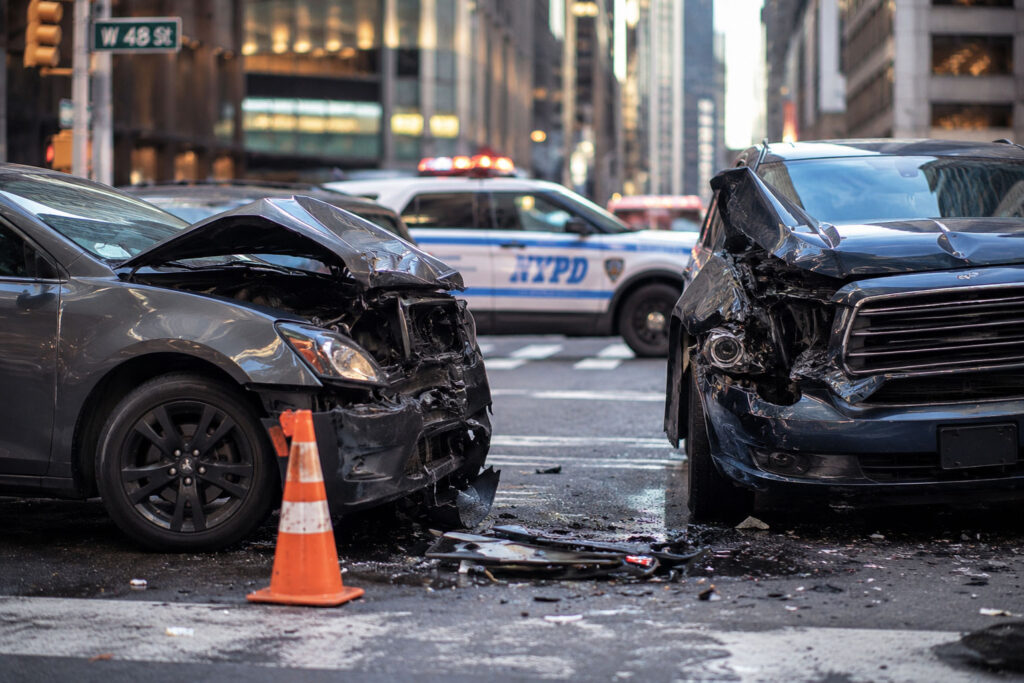
Automotive Accident Lawyer: Your Guide to Legal Representation in New York

Home » Automotive Accident Lawyer: Your Guide to Legal Representation in New York
Table of Contents
ToggleAn automotive accident lawyer specializes in tort law and represents individuals injured due to the negligence of other drivers in motor vehicle crashes. In New York, these attorneys operate within a layered legal system that includes mandatory no-fault insurance, a statutory “serious injury” threshold for pain and suffering claims, and strict filing deadlines that can eliminate a victim’s rights if missed.
This article covers New York’s no-fault insurance rules, the serious injury threshold under Insurance Law § 5102(d), comparative fault standards, filing deadlines, and the types of compensation available after a car accident. It is written for accident victims in New York who need to understand their legal rights and decide whether to hire a car accident lawyer.
Understanding Automotive Accident Legal Representation
An automotive accident lawyer helps car accident victims recover compensation by handling the legal, procedural, and evidentiary work that follows a crash. This includes gathering proof of liability, ensuring compliance with New York insurance law, evaluating injuries against the serious injury threshold, and negotiating or litigating for maximum compensation.
Core Responsibilities of Automotive Accident Lawyers
Investigation forms the foundation of every car accident case. An accident attorney examines the crash scene, obtains police reports, collects traffic camera or surveillance footage, and photographs vehicle damage and road conditions. A lawyer can help gather critical evidence for your case, including witness statements, medical records, and expert analyses of speed, angle, and driver reaction times.
Communication with insurance companies is the second pillar. Insurance adjusters are trained to minimize payouts; attorneys can negotiate effectively, preventing victims from giving recorded statements that undermine their claims. Legal representation can help secure fair settlements for accident victims by countering lowball offers with documented evidence.
The third responsibility is protecting the injured victim’s rights under New York’s procedural requirements. This means meeting every filing deadline, from the 30-day no-fault notice to the statute of limitations for a personal injury lawsuit, and ensuring the claim is properly valued. Accurate claim valuation includes both economic and non-economic damages.
Types of Automotive Accident Cases
New York automotive accident lawyers handle a range of automobile accident cases: car accidents on city streets and highways, truck accidents involving commercial vehicles, motorcycle crashes, pedestrian incidents, and multi-vehicle accidents at congested intersections. This practice area also covers accidents involving bicyclists on Brooklyn’s avenues or rideshare vehicles in Manhattan.
Each case type carries distinct liability questions. Truck accidents, for example, may involve federal hours-of-service regulations and employer liability. Motorcycle crashes often produce catastrophic injuries like traumatic brain injuries or broken bones because riders lack the structural protection of a car. Pedestrian cases raise questions about crosswalk laws, traffic signal timing, and driver negligence.
New York’s no-fault system, serious injury threshold, and comparative fault rules create a legal environment that differs from most other states. Understanding those rules is the next step.
New York Automotive Accident Law
New York’s No-Fault Insurance System
Under Insurance Law Article 51, New York requires every auto insurance policy to include personal injury protection (PIP), also called no-fault benefits. These benefits cover accident-related medical expenses, lost income, and other reasonable costs regardless of who caused the crash. The maximum basic economic loss benefit is $50,000 per person per accident.
Work loss benefits under no-fault pay up to $2,000 per month for up to three years after the accident. Other reasonable and necessary expenses, such as transportation to medical care or household help, are reimbursable at up to $25 per day for up to one year. New York requires written notice of a no-fault claim within 30 days of the accident, and accident victims should promptly report the accident to their insurer.
Once medical bills and lost wages exceed the $50,000 PIP limit, additional recovery must come from a fault-based liability claim against the at-fault driver. New York’s no-fault insurance covers accident-related medical expenses, but it does not cover non-economic damages like pain and suffering. To pursue those, a victim must meet the serious injury threshold.
Serious Injury Threshold Requirements
Insurance Law § 5102(d) defines “serious injury” through nine categories: death; dismemberment; significant disfigurement; fracture; loss of a fetus; permanent loss of use of a body organ, member, function, or system; permanent consequential limitation of use of a body organ or member; significant limitation of use of a body function or system; or a non-permanent injury that prevents the victim from performing substantially all daily activities for at least 90 out of the 180 days immediately following the injury.
In New York, pursuing a lawsuit for pain and suffering requires a serious injury under one of these categories. Without meeting the threshold, courts will dismiss non-economic damage claims on summary judgment.
Comparative Fault Rules in New York
Under CPLR § 1411, New York uses a pure comparative negligence system for most tort cases. A plaintiff’s recovery is reduced by their percentage of fault but is not eliminated, even if the plaintiff bears more than 50% of the blame.
Auto accident cases now follow a different rule. As of 2026, a carve-out under Insurance Law Article 51 bars non-economic damages entirely if the claimant’s share of fault exceeds the combined fault of all defendants. If a jury finds the plaintiff 51% at fault and the defendant 49% at fault, the plaintiff loses all pain and suffering damages.
The Legal Process for Automotive Accident Claims
Filing and winning a car accident claim in New York requires a structured approach: gathering evidence before it disappears, meeting every deadline, and building a case that survives summary judgment motions on the serious injury threshold.
Investigation and Evidence Gathering Procedures
The strength of a personal injury case depends on evidence collected in the days and weeks after the crash. Delays lead to lost footage, faded memories, and gaps in medical records that insurance adjusters exploit.
- Accident scene analysis: Photograph the accident site, vehicle damage, skid marks, traffic signals, and road conditions. Gather evidence like police reports and witness statements. Request traffic camera or surveillance footage from nearby businesses before it is overwritten.
- Witness interviews: Record names, contact information, and descriptions of what witnesses observed. Cross-reference their accounts with the police report for consistency.
- Medical record compilation: Seek medical attention immediately after the crash, even if injuries seem minor. Emergency room records, diagnostic imaging (MRI, X-ray, CT scan), follow-up specialist visits, and physical therapy notes all build the medical documentation needed to meet the serious injury threshold. Victims can claim medical expenses after a car accident, and compensation may include future medical treatment costs.
- Expert consultation: Accident reconstruction specialists can calculate vehicle speed, impact angle, and driver reaction time. Medical experts provide opinions on whether injuries are permanent or meet the 90/180-day threshold. Vocational experts assess lost earning capacity when an injured client cannot return to their previous occupation.
Filing Deadlines and Legal Requirements Comparison
Missing a single deadline can forfeit an entire claim. New York imposes different time limits depending on the type of claim and the defendant involved.
| Claim Type | Filing Deadline | Legal Authority |
|---|---|---|
| Personal injury (non-fatal) | 3 years from accident | CPLR § 214(5) |
| Wrongful death | 2 years from date of death | EPT § 5-4.1 |
| Property damage | 3 years from accident | CPLR § 214(4) |
| No-fault benefits (PIP) notice | 30 days from accident | Insurance Law / No-Fault Law |
| Notice of claim vs. government entity | 90 days from accident | General Municipal Law § 50-e |
Common Challenges and Solutions
Three obstacles appear in the majority of New York car accident cases: insurer tactics designed to reduce payouts, the difficulty of proving serious injury, and gaps in coverage when the at fault driver lacks adequate insurance.
Insurance Company Delay Tactics
Insurance companies often offer low initial settlements, sometimes within days of the crash, hoping victims will accept before understanding the full extent of their injuries. Other tactics include requesting unnecessary documentation, prolonging claim verification, and challenging whether medical providers’ bills are “reasonable and necessary.” A lawyer’s trial readiness influences settlement offers from insurance companies; adjusters settle for higher amounts when they know a case is prepared for court rather than dependent on a quick resolution.
The solution: retain a personal injury lawyer before engaging with the insurer. Attorneys send demand letters backed by medical evidence, file arbitration for no-fault disputes when the insurer stalls, and prevent clients from giving recorded statements that can be used against them.
Proving Serious Injury Under New York Law
Soft tissue injuries, including whiplash and chronic back or neck pain, frequently fail to meet the serious injury threshold because they rely on subjective complaints without corroborating imaging. Gaps in medical treatment create an inference that the injury was not serious enough to require consistent medical care. Insurance adjusters scrutinize treatment timelines; a three-month gap between doctor visits can undermine an otherwise valid claim.
Building a threshold-qualifying case requires seeing medical professionals early and consistently, obtaining MRIs or X-rays that show structural damage, securing functional capacity reports from treating physicians, and maintaining a daily activity diary that documents limitations. Expert witnesses who can testify to injury permanence or the 90/180-day disability period are often necessary to survive a defense motion for summary judgment.
Dealing with Uninsured or Underinsured Drivers
New York’s minimum liability coverage is $25,000 per person and $50,000 per accident for bodily injury, with $10,000 for property damage. When a car crash causes serious injuries, these minimums are exhausted quickly; a single surgery can generate medical bills exceeding $25,000. If the other driver carries only minimum coverage or no insurance at all, the victim faces a coverage gap.
The primary solution is activating your own policy’s uninsured motorist (UM) or supplementary underinsured motorist (SUM) coverage, which New York requires insurers to offer. SUM claims for non-economic damages still require meeting the serious injury threshold. In hit-and-run situations, PIP benefits cover initial medical expenses while the UM claim proceeds. An experienced accident attorney can identify all available sources of recovery, including third-party liability claims against vehicle owners, employers, or municipal entities responsible for road design.
These challenges underscore why legal representation matters from the earliest stages of a car accident case.
Next Steps
Immediate steps to protect your claim:
- Seek medical care at the emergency room or urgent care within 24 hours, even for injuries that seem minor. Delayed treatment undermines serious injury claims.
- Document everything: photograph the accident site, vehicle damage, and your injuries. Obtain the police report. Collect witness names and contact information.
- Report the accident to your insurer within the 30-day no-fault deadline, but do not give a recorded statement without legal counsel.
- Contact a qualified car accident attorney before accepting any settlement offer. Most personal injury lawyers work on a contingency fee basis, meaning no upfront cost.
How NTZ Law Can Help with Your New York Automotive Accident Case
Nicholas E. Tzaneteas is a Brooklyn and New York City car accident attorney with more than 20 years of experience and over $800 million recovered for injured clients across the five boroughs. NTZ Law handles car accidents, truck accidents, motorcycle crashes, and bicycle collisions throughout NYC.
The firm offers a free consultation and is selective with the cases it takes. Every case NTZ accepts is prepared for trial, which creates leverage during insurance negotiations. The legal team manages all communication with insurance companies and opposing counsel, allowing clients to focus on recovery.
Compensation types NTZ Law pursues include medical bills, long-term care costs, physical therapy, property damage, lost wages and loss of earning capacity, pain and suffering, and wrongful death damages. The firm’s local knowledge of Brooklyn and NYC roads, municipal agencies, intersection designs, and borough-specific traffic patterns supports evidence gathering, from obtaining surveillance footage to accessing traffic camera data from city agencies.
For a free case evaluation, call (833) NTZ-FIRM or contact NTZ Law online.
Schedule a free consultation
THE LAW OFFICES OF NICHOLAS E. TZANETEAS
-
1392 Coney Island Avenue
Brooklyn, New York 11230
-
55 Church Street, Suite 201
White Plains NY 10601