What to Do When Your Apartment Ceiling Falls: Complete Guide

Home » What to Do When Your Apartment Ceiling Falls: Complete Guide
Table of Contents
ToggleWhen your ceiling collapses in your apartment, you face immediate dangers from falling debris, potential injuries, and sudden loss of a safe living space. A ceiling collapse occurs when structural materials—drywall, plaster, tiles, or support elements—fail and fall into your living area, often without warning. This situation demands that you act quickly to protect yourself and your loved one while preserving your legal rights.
When a Ceiling Fell in Apartment
This guide covers everything you need to know regarding a ceiling collapse: emergency response procedures, your legal options against a negligent landlord, documentation requirements for insurance and legal claims, and the full recovery process from temporary housing to financial compensation. The scope includes water damage scenarios, structural issues in older buildings, and landlord liability assessment, though specific building code violations requiring engineering expertise fall outside this guide.
If you’re a renter who just experienced a ceiling collapse or noticed dangerous sagging and cracks, this content addresses your situation directly. Whether you live in a small apartment in New York City or a rental property elsewhere in the area, understanding your rights and next steps can mean the difference between absorbing thousands of dollars in losses and recovering full compensation.
If your ceiling collapsed, evacuate the area immediately, call emergency services if anyone is injured, document everything with photos and videos, notify your landlord in writing, and seek medical attention even for minor injuries. Do not return to the affected area until it’s declared safe.
Understanding Apartment Ceiling Collapse
A ceiling collapse is the sudden failure of ceiling materials or their supporting structures, causing them to collapse into the occupied space below. This differs from gradual deterioration—when a ceiling caves in, it represents a critical structural failure that often signals deeper problems throughout the building. In rental properties, this type of property damage triggers specific landlord responsibilities under habitability laws and may establish grounds for personal injury claims if negligence is proven.
Ceiling collapses matter because they pose immediate safety hazards, can cause serious injuries from debris impacts, and often indicate that the apartment is no longer fit for habitation. For tenants, a collapsed ceiling transforms a housing situation into both a safety emergency and a legal matter involving landlord liability, insurance claims, and potential compensation for damages caused.
Common Causes of Ceiling Failure
- Water damage stands as the leading cause of ceiling collapse in apartments. Plumbing leaks from the unit above, roof deterioration, or HVAC system failures allow moisture to saturate ceiling materials over time. This water weakens drywall, causes plaster to crumble, rots wooden joists, and corrodes metal fasteners. When landlords ignore reports of water stains or dripping, they create conditions where collapse becomes inevitable rather than merely possible.
- Structural deterioration accelerates in older buildings where decades of deferred maintenance compound original construction weaknesses. Joists lose strength, fasteners pull free from overloaded connections, and materials simply fail from age. Termites and other pests can hollow out structural members invisibly. Property managers who skip regular inspections or ignore visible warning signs bear responsibility when these conditions lead to collapse.
The connection between these causes and tenant safety is direct: both water damage and structural problems are conditions a landlord must fix through timely repairs. When repair requests go unanswered, landlords establish the pattern of neglect that forms the basis of liability claims.
Types of Ceiling Collapse Damage
Partial collapse involves a section of ceiling giving way—perhaps around a light fixture, along a water-damaged area, or where a localized structural failure occurs. Complete failure means the entire ceiling, or substantial portions of it, detach and fall, resulting in more extensive property damage and a higher risk of injury.
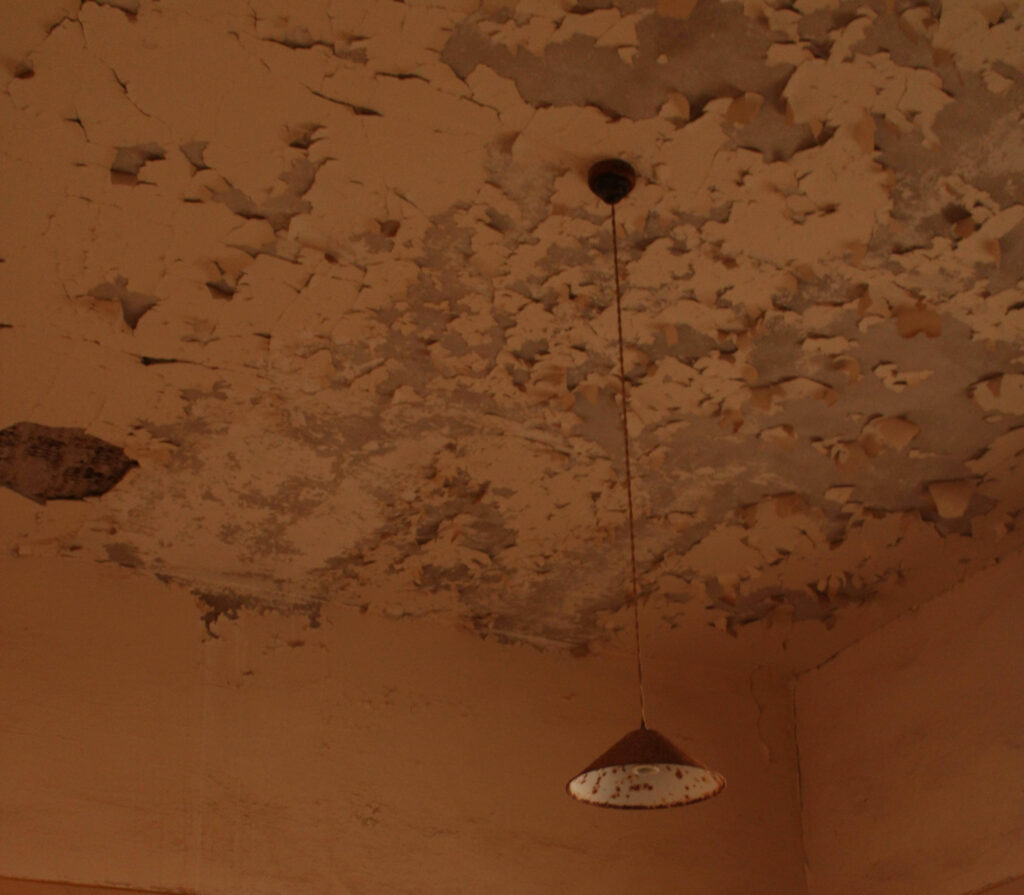
Before collapse, ceilings typically show warning signs: sagging sections that bulge downward, cracks that widen over days or weeks, separation at seams, discoloration from moisture, or visible debris particles falling. These indicators deserve immediate attention because they often precede total failure by days or hours.
Understanding these damage types matters because your response and legal position differ by severity. A small hole may be a repair issue; a full collapse that renders your bedroom uninhabitable triggers different landlord obligations and insurance considerations, which is why immediate response is critical.
Immediate Response and Safety Actions
The moments after a ceiling collapse occur determine both your physical safety and the strength of any future insurance claim or legal action. Whether you witnessed the collapse or discovered the damage afterward, following systematic safety procedures protects you and helps you build the documentation you’ll need.
Emergency Safety Procedures
When a ceiling collapse happens, act quickly with these immediate steps:
- Evacuate the affected area immediately. Do not remain beneath any damaged ceiling section, even if it appears stable. Secondary collapses can happen within minutes as remaining materials lose support.
- Check yourself and others for injuries. Falling debris can cause head trauma, cuts, bruises, and respiratory problems from dust inhalation. If anyone is hurt, call 911 immediately. Even seemingly minor injuries deserve medical attention.
- Shut off utilities if safe to do so. Turn off the electricity at the breaker box if you can access it without entering the damaged area—exposed wiring poses an electrocution risk. If you smell gas or see water flowing, shut those off as well.
- Secure the area and remove pets. Block access to prevent others from entering. Move undamaged belongings away from the collapse zone to prevent further damage to property.
- Contact your landlord or property owner immediately. Report the incident by phone first for urgency, then follow up in writing via email or text to create a record. If you can’t reach the landlord, contact the building superintendent or property managers.
Documentation Requirements
Thorough documentation begins immediately and continues throughout your recovery process. Take high-resolution photos and videos from multiple angles showing the collapsed ceiling, debris on the floor, damaged personal property, and any preceding conditions you can still observe—water stains, cracks, mold, or other structural issues.
Preserve physical evidence by leaving debris in place until you’ve documented everything. If ceiling materials must be moved for safety, photograph their original positions first. Keep samples of materials that show water damage or deterioration.
Maintain all written communication with your landlord. Send notices via email with delivery confirmation or by certified mail, clearly stating the date and time of collapse, any visible damage, and your request for immediate repair and alternative housing, if needed. Reference any previous repair requests you made about ceiling conditions. This documentation establishes that the landlord had notice of problems.
If injuries occurred, seek medical attention promptly and keep all records: emergency room visits, doctor appointments, diagnostic reports, medical bills, and prescriptions. Document symptoms even if they seem minor, like breathing issues from dust inhalation or soft tissue injuries, which may worsen over time.
Temporary Accommodation Needs
When ceiling collapse renders your apartment uninhabitable—due to exposed structure, risk of further collapse, water intrusion, or mold—you have the right to safe alternative housing. An uninhabitable unit means you cannot safely use the bedroom, bathroom, or common areas affected by the collapse.
Landlord obligations vary by state, but habitability laws generally require property owners to provide or pay for temporary housing when structural defects make a unit unsafe. In New York, for example, a ceiling collapse constitutes a Class C “Immediately Hazardous” violation requiring the landlord to act within 24 hours.
Financial responsibility for temporary housing typically falls on the landlord when their negligence caused the collapse. Your renters insurance policy may also cover Additional Living Expenses, including hotel costs, meals, and storage—check your policy immediately. Keep all receipts for lodging, food, transportation, and storage of personal property, as these become part of your compensation claim.
Legal Rights and Financial Recovery
After addressing immediate safety concerns, understanding your legal options becomes essential for recovering financially. Ceiling collapses often result from landlord’s failure to maintain property, creating liability for resulting damages. Your rights depend on establishing fault, documenting losses, and pursuing appropriate compensation channels.
Landlord Liability Assessment
Determining whether you can hold your landlord responsible involves establishing that they knew or should have known about the dangerous condition and failed to address it. Follow this process:
- Review your lease agreement. Identify clauses about maintenance responsibilities, required notice for repairs, and any provisions about structural issues. Most leases confirm landlord responsibility for major structural repairs, regardless of how they’re worded.
- Compile your repair request history. Gather emails, texts, letters, or documented phone calls where you reported ceiling problems—water stains, cracks, sagging, previous lung or breathing issues from mold. This establishes actual notice.
- Establish negligence through constructive notice. Even without direct complaints, if the condition existed long enough for a reasonable landlord to discover it during a routine inspection, constructive notice applies. Building inspection reports, neighbor complaints, and documented building code violations support this.
- Identify all responsible parties. Beyond your landlord, liability may extend to property management companies, maintenance contractors, or even upstairs neighbors whose negligence (such as an overflowing bathtub) caused the water damage that led to the collapse.
In New York City and other jurisdictions with strong tenant protections, building code violations related to ceiling collapse create presumptions of landlord fault that shift the burden of proof.
Compensation Comparison
Understanding what damages you can recover—and from whom—helps you pursue appropriate compensation:
| Damage Type | Tenant Responsibility | Landlord Responsibility |
|---|---|---|
| Personal property (furniture, electronics, clothing) | Covered by renters insurance if you have a policy; may not recover from landlord unless negligence proven | Generally not liable for tenant belongings, but responsible if negligence caused the damage |
| Medical expenses and medical bills | Tenant pays initially; recover from landlord through liability claim if negligence established | Liable for all injury-related costs when premises liability is proven—includes hospital bills, ongoing treatment, prescriptions |
| Temporary housing and relocation | Renters insurance may cover Additional Living Expenses; keep receipts | Obligated under habitability laws to provide or pay for alternative housing when unit is unsafe due to structural defects |
| Lost wages from inability to work | Document thoroughly; recover through personal injury claim | Liable when injuries from collapse prevent work and negligence is proven |
Beyond these direct costs, you may recover non-economic damages for pain and suffering if the ceiling collapse caused serious injuries. In cases of gross negligence, such as ignoring multiple urgent repair requests for months, punitive damages may apply, potentially amounting to several thousand dollars or more.
A free consultation with an experienced attorney, such as The Law Offices of Nicholas E. Tzaneteas in New York City, can clarify what compensation applies to your specific situation and whether your case justifies legal action.
Common Challenges and Solutions
Tenants pursuing recovery after ceiling collapse often encounter obstacles. Knowing these challenges in advance helps you respond effectively.
Landlord Denies Responsibility
When a property owner claims the damage was your fault or that they had no notice of problems, documentation becomes your strongest tool. Compile all evidence of previous complaints: emails about water stains, photos you took of developing cracks, text messages asking for repairs, and witnesses who saw the deteriorating condition.
If verbal complaints weren’t documented, note dates and details you remember—they can still support your case. An experienced attorney can help establish constructive notice by showing that the condition existed long enough for any reasonable landlord to discover it through basic maintenance.
Insurance Company Delays
Insurance companies sometimes delay claims, request excessive documentation, or dispute coverage. File promptly—most policies have deadlines. Provide complete documentation including photos, repair estimates, medical records, and receipts.
If delays continue, insist on written explanations for any denials. You have the right to a timely resolution under your policy terms. Consider consulting a public adjuster for complex claims or seeking legal help if the insurance company acts in bad faith. Note your state’s statute of limitations—in New York, personal injury claims generally must be filed within three years.
Rent Payment During Uninhabitable Conditions
When your apartment is unsafe due to a ceiling collapse, you may have legal options regarding rent. Many states allow tenants to withhold rent when landlords fail to maintain habitable conditions—but specific procedures must be followed to protect yourself legally. New York supports rent abatement when conditions make units uninhabitable.
Before you withhold rent, document the uninhabitable conditions thoroughly, provide written notice to your landlord specifying the problems, and consult your state’s specific landlord-tenant laws or a lawyer. Improperly withholding rent can expose you to eviction, regardless of the collapse, and may affect your security deposit recovery.
Next Steps
A ceiling collapse transforms your living situation into an emergency that requires immediate safety action, followed by strategic legal and financial recovery. Your first priority is always physical safety—evacuating, seeking medical attention for any injuries, and ensuring you’re not in danger from further structural failure. Your second priority is documentation that protects your rights against negligent landlords and supports your insurance claim.
Take these immediate actions:
- Seek medical attention for any injuries, even those that seem minor. Document all treatment and keep medical bills.
- Contact an attorney for a free consultation to understand your legal options and the strength of your liability claim against the landlord.
- File insurance claims with both your renters insurance and, through your attorney, against the landlord’s property insurance.
- Document ongoing damages, including temporary housing costs, lost wages, additional medical bills, and replacement of personal property.
Recovery timelines vary based on severity. Minor structural repairs may take days; significant restoration requiring permits and contractor work can extend to weeks. Legal claims, if the landlord denies responsibility, may take months to resolve.
Related concerns often accompany ceiling collapse—mold exposure from water damage can cause breathing issues and other health problems, while underlying building code violations may indicate broader structural issues throughout the building. If you suspect either condition, raise these with health authorities and building inspectors.
Contact The Law Offices of Nicholas E. Tzaneteas
If you have had a ceiling collapse in your apartment that has caused damage and/or injuries, contact The Law Offices of Nicholas E. Tzaneteas in New York City. We have experience handling and winning cases for clients with collapsed ceilings. In addition to lost wages, pain and suffering, and medical bills, you can also get compensation for alternative housing costs while your home is being repaired by qualified professionals.
Schedule a free consultation
THE LAW OFFICES OF NICHOLAS E. TZANETEAS
-
1392 Coney Island Avenue
Brooklyn, New York 11230
-
55 Church Street, Suite 201
White Plains NY 10601