The Ceiling is Leaking: Complete Guide to Causes, Solutions, and Prevention

Home » The Ceiling is Leaking: Complete Guide to Causes, Solutions, and Prevention
Table of Contents
ToggleWhen the ceiling in your apartment or home is leaking, you need to act immediately to protect the structure and prevent costly repairs. If you rent the property, call your landlord immediately to rectify the situation. A ceiling leak signals water intrusion that can rapidly escalate from a minor inconvenience to extensive damage affecting electrical wiring, insulation, and ceiling joists within hours. It can also cause a ceiling to collapse and severe injuries.
This guide covers what tenants need to know about ceiling water leaks—from emergency response protocols and cause identification to professional repair solutions and long-term prevention strategies. Whether you’re dealing with active water dripping or trying to determine whether those water stains indicate a serious problem, this resource provides actionable steps for your specific situation.
Understanding Ceiling Leaks
A ceiling leak occurs when water penetrates the ceiling assembly from above, whether through pipe leaks, roof failures, or condensation issues. Understanding that even a small leak demands immediate action is critical—water continues to spread through drywall, weakening ceiling joists and creating conditions for mold growth within 24-48 hours of sustained moisture exposure.
The urgency extends beyond structural concerns. A leaking ceiling directly impacts homeowner safety by posing electrical hazards, threatens property value by causing visible damage, and can multiply repair costs exponentially when left unaddressed. Water that seems contained to a small area often travels 20-30 feet along rafters and framing before becoming visible, meaning the damage you see represents only a fraction of the problem.
Types of Ceiling Leaks
Active dripping leaks appear as visible water falling from a defined point, often indicating a burst pipe, a significant roof breach, or an appliance overflow. These require an emergency response within minutes, as water flow from a failed fitting can reach 10-20 gallons per minute.
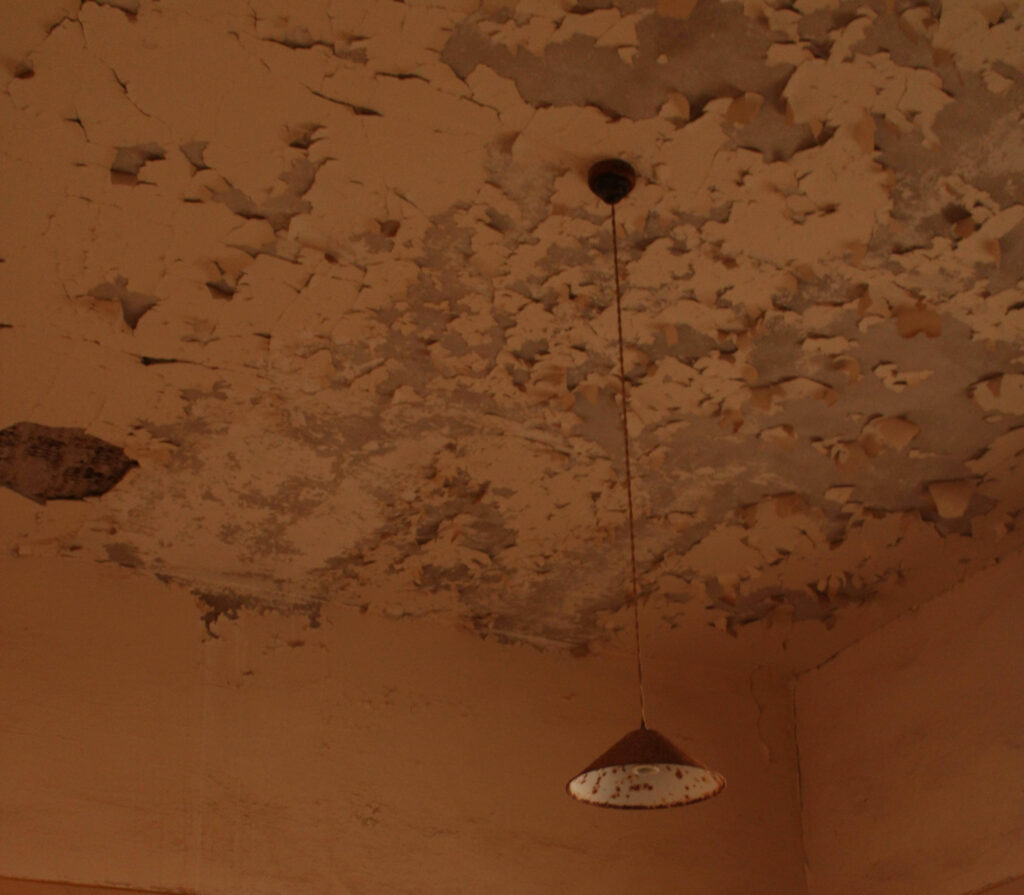
Slow moisture seepage manifests as expanding water stains, peeling paint, or a musty odor without obvious dripping. This type often proves more insidious—a plumbing issue or condensation problem may saturate insulation and drywall for weeks before a property owner notices. Both types require professional assessment, but active leaks necessitate immediate source control while seepage allows time for methodical diagnosis.
Common Warning Signs
The obvious signs of a ceiling water leak include yellowish-brown discoloration from water stains (caused by tannins leaching from wet wood), paint bubbling or peeling paint where moisture exceeds 15-20% content, and sagging drywall that creates convex bulges. A water-damaged ceiling may drop 1-6 inches before the risk of ceiling collapse becomes a genuine concern.
Less apparent indicators include a persistent musty odor signaling early mold growth or mildew growth, unexplained spikes in water bills suggesting hidden water leaks, and soft spots when pressing ceiling areas. Recognizing these signs early prevents the progression from minor water intrusion to structural issues requiring full ceiling replacement.
Understanding these warning signs leads naturally to the critical next step: pinpointing exactly where the leak occurs and what’s causing it.
Identifying Ceiling Leak Sources
Once you’ve identified that water is leaking from the ceiling, determining the source becomes essential for proper repair. The most common causes fall into three categories, each requiring different professional expertise and repair approaches.
Plumbing-Related Leaks
Pipe leaks account for approximately 30% of ceiling water damage, typically originating from supply lines, drain connections, or water heaters on upper floors. A leaking pipe from an upstairs bathroom often presents as a consistent drip regardless of weather conditions—a key diagnostic distinction from roof issues.
Signs of a plumbing issue include leaks that worsen when fixtures are used, changes in water pressure throughout the house, and discoloration directly below bathrooms or kitchens. Supply line failures under 40-80 psi pressure can cause sudden flooding, while slow-drain leaks may go undetected for months. A professional plumber uses borescope cameras to inspect the interiors of pipes, identifying corrosion or joint failures with 95% accuracy.
Roof-Related Leaks
Roof failures cause 40-50% of ceiling leaks, making them the single largest category. Damaged shingles—cracked, curled, or missing after storms with winds exceeding 50 mph—allow water entry during rainfall. Equally problematic are clogged gutters, reducing drainage capacity, and deteriorated flashing around chimneys, vents, and skylights.
Roof-related water leaks correlate directly with precipitation events, typically appearing 12-48 hours after significant rain. However, water often travels laterally through the attic along rafters before dripping, misleading homeowners about the entry point. The visible damage on your ceiling may be 20 feet from where water actually enters. Seasonal inspection after storms catches 80% of potential failures before they cause interior damage.
HVAC System Leaks
Your HVAC system generates substantial condensation—up to 20 pints daily in humid climates—which normally drains safely away. When drain lines clog with algae or debris, the condensate pan overflows, sending water through ceiling materials. This is common in homes with attic-mounted air handlers.
An HVAC technician can identify blockages that can reduce flow by up to 90% in neglected systems. These leaks often follow seasonal patterns, worsening during heavy cooling seasons when condensation production peaks. Additional HVAC-related ceiling leaks include failed ductwork connections that allow condensation to drip and improper insulation that creates excessive condensation on cold surfaces.
With the source identified, you can proceed to the appropriate emergency response and connect with the right professional for repair.
Emergency Response and Repair Process
The first hour after discovering a ceiling leak determines whether you’re facing a manageable repair or extensive damage requiring full restoration.
Immediate Safety Actions
A leaking ceiling near light fixtures or electrical wiring creates a potentially dangerous situation. Water conductivity increases shock risk significantly when depths exceed 1/16 inch near 120V outlets.
Contact your landlord immediately to take the following steps:
- Shut off electricity to the affected area at the breaker panel—never touch wet electrical components or switches in the leak zone
- Contain visible water by placing buckets beneath drips and laying tarps or plastic sheeting to redirect water away from furniture and flooring
- Relieve ceiling pressure by poking a small hole with a screwdriver at the lowest point of any bulging area, allowing water to drain in a controlled way rather than risking ceiling collapse
- Document all damage with timestamped photos and video
- Stop the water source if identifiable—shut off the main water supply for plumbing leaks or place temporary tarps over roof damage
Common Challenges and Solutions
Ceiling leaks often present complications beyond the obvious visible damage. Prolonged exposure to moisture creates secondary problems that, if overlooked, lead to recurring issues and escalating repair costs.
Hidden Water Damage
Water travels through walls, insulation, and floor cavities before appearing on ceilings, meaning visible damage represents only a portion of the affected area. Professional remediation teams use infrared thermography to detect temperature differentials of 5-10°F, indicating moisture, and moisture meters to identify drywall readings above 17%—the threshold for mold risk.
Solution: Request comprehensive moisture mapping before any ceiling repair. IICRC standards require removing drywall at least 2 feet beyond the visible damage, drying cavities to less than 15% moisture content using commercial fans and dehumidifiers, and applying an antimicrobial treatment before reconstruction.
Electrical Safety Hazards
Water near light fixtures, ceiling fans, or junction boxes can cause serious electrical shorts and fire hazards. Even after visible dripping stops, moisture in electrical boxes can cause arcing for weeks.
Solution: Keep electricity off to the affected area until a licensed electrician inspects all fixtures and wiring within the leak zone. Replace any light fixtures or wiring showing corrosion, and never assume electrical components are safe simply because they appear dry on the outside.
Recurring Leaks After Repair
Approximately 40% of DIY ceiling leak repairs fail because they address symptoms rather than the root cause. A quick fix that patches drywall without resolving the underlying plumbing issue or roof deficiency guarantees the leak will return—often causing damage to your freshly repaired work.
Solution: Ensure any repair includes verified source remediation with testing. For plumbing repairs, run water through fixtures and observe for 24-48 hours. For roof repairs, request water testing of the repaired area. Document that the source was fixed before authorizing ceiling restoration.
These challenges underscore why preventive maintenance is far more cost-effective than reactive repairs.
Prevention and Next Steps
A leaking ceiling represents both an immediate crisis and a warning about your home’s maintenance needs. Quick professional response limits damage from active leaks, while systematic prevention reduces 60-75% of ceiling leaks caused by deferred maintenance.
For ongoing leak situations, take these sequential steps:
- Maintain the electricity shutoff until professional clearance
- Have your landlord schedule professional source repair within 24-48 hours, including arranging moisture testing before ceiling restoration, completing mold assessment if water exposure exceeded 48 hours
For leak prevention, make sure the property owner/manager implements these independent maintenance practices:
- Conducts annual roof inspections, especially after storms, focusing on granule loss, flashing integrity, and gutter flow
- Schedules biannual HVAC maintenance, including drain line clearing to prevent condensation overflow
- Tests water pressure quarterly and inspect visible plumbing for corrosion or dripping
- Maintains attic ventilation and R-49 insulation to prevent ice dams and condensation
- Installs water leak sensors near water heaters, under sinks, and in HVAC drain pans
Contact The Law Offices of Nicholas E. Tzaneteas
If you have a leaking ceiling that causes damage and/or injuries, call an experienced lawyer. The Law Offices of Nicholas E. Tzaneteas in New York City has experience handling and winning cases for clients with collapsed ceilings. You may not know this, but in addition to lost wages, pain and suffering, and medical bills, you can also get compensation for alternative housing costs while your home is being repaired by qualified professionals.
Schedule a free consultation
THE LAW OFFICES OF NICHOLAS E. TZANETEAS
-
1392 Coney Island Avenue
Brooklyn, New York 11230
-
55 Church Street, Suite 201
White Plains NY 10601