New York City Construction Accidents Lawyer: Your Guide to Protecting Your Rights

Home » New York City Construction Accidents Lawyer: Your Guide to Protecting Your Rights
Table of Contents
ToggleIf you or someone in your family was hurt on a New York City construction site, the decisions you make in the next few days will shape the outcome of your case. A construction accident in NYC raises legal questions that most workers never anticipate: Who is responsible? What claims exist beyond workers’ compensation? How much time do you have to act?
This article explains how NYC construction accident claims work and how the Law Firm of Nicholas Tzaneteas represents injured construction workers, bystanders, and families after serious site injuries or deaths across all five boroughs.
What you will learn:
- How New York City construction accident claims differ from ordinary personal injury cases
- Who can be held legally responsible for unsafe conditions on NYC job sites
- What compensation may be available beyond workers’ compensation benefits
- What to do immediately after a construction site injury to protect your rights
- How the Law Firm of Nicholas Tzaneteas investigates and builds these cases
Understanding NYC Construction Accident Claims
A New York City construction accident claim is a legal action brought by a person injured on or near a construction site in any of the five boroughs. It can combine a workers’ comp claim for on-the-job injury benefits with a separate personal injury lawsuit against negligent third parties such as property owners, general contractors, or site managers.
NYC is distinct from most U.S. cities in this area. Dense high-rise development, continuous renovation of older buildings, and a complex web of owners, managing agents, general contractors, and subcontractors create layered liability on nearly every project. New York State also imposes some of the strictest construction safety statutes in the country, giving injured workers legal tools unavailable in other states.
Construction Accidents and New York Labor Law
New York’s Labor Law contains three sections that directly protect construction workers:
- Labor Law § 240(1), known as the “Scaffold Law,” imposes strict liability on owners, contractors, and their agents when a worker is injured by an elevation-related hazard and the required safety devices (scaffolds, harnesses, guardrails, safety nets) were absent, defective, or improperly placed. To win a § 240(1) claim, a plaintiff must show the task involved an elevation risk covered by the statute, the defendant failed to furnish adequate safety devices, and that failure caused the injury. Courts limit this section to hazards involving a physically significant elevation differential, such as falls from heights or injuries from falling objects.
- Labor Law § 241(6) imposes a nondelegable duty on owners and contractors to comply with specific safety rules in the New York State Industrial Code during construction, demolition, or excavation. Only Industrial Code provisions with concrete specifications (e.g., requiring particular dimensions or specific safety features) support a § 241(6) claim. Broad directives using words like “adequate” or “safe” without measurable requirements are insufficient.
- Labor Law § 200 codifies the general duty of owners and general contractors to provide a safe workplace. Liability depends on whether the injury arose from a dangerous premises condition (requiring proof of actual or constructive notice) or from the method of work (requiring proof that the defendant exercised direct supervision or control over the specific activity that caused the injury). General oversight alone is insufficient.
These statutes can hold property owners and contractors responsible for unsafe elevation-related work even if they were never physically on site. In a standard negligence claim, the injured worker must prove the defendant was careless. Under § 240(1), by contrast, strict liability shifts the burden: once the plaintiff shows an elevation hazard and a missing or defective safety device, the defendant is liable regardless of fault.
Workers’ Compensation vs. Third-Party Construction Lawsuits
Workers’ compensation in NYC is a no-fault system: any employee injured in the course of employment is entitled to medical treatment and partial wage replacement regardless of who caused the accident. Workers’ compensation benefits are capped by state law and generally cover about 66 2/3 percent of lost wages. The trade-off is that workers’ compensation law bars the employee from suing the direct employer for negligence, except in narrow “grave injury” circumstances.
That bar does not extend to other parties. Third-party claims allow lawsuits against property owners, general contractors, subcontractors, equipment manufacturers, or any negligent third party whose actions or omissions created unsafe conditions on the site. These personal injury cases permit recovery of damages workers’ compensation does not cover: full lost wages, future medical expenses, pain and suffering, loss of enjoyment of life, and disfigurement.
Common Types of Construction Accidents in New York City
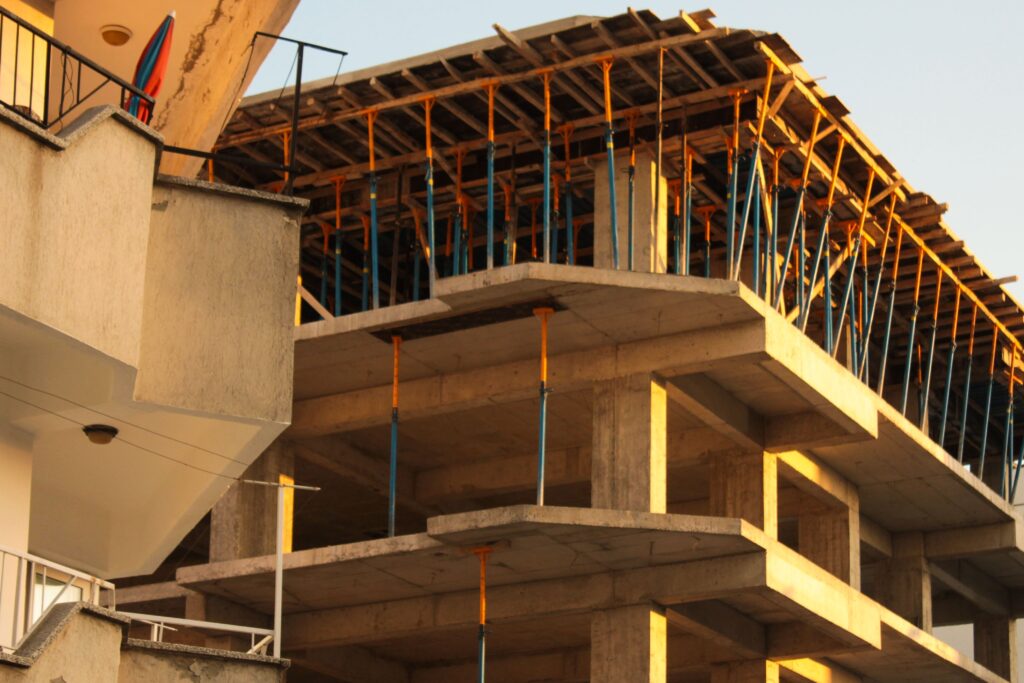
NYC’s skyline is defined by scaffolding, cranes, and street-level excavation. In 2023, one in five workplace deaths occurred in the construction industry. The causes of construction accidents on city sites follow patterns shaped by high-rise work, narrow streets, aging infrastructure, and heavy equipment operating alongside pedestrians.
Falls From Heights and Scaffolding Accidents
Falls account for nearly 40% of construction deaths. In New York City, falls from scaffolds, ladders, roofs, and unprotected platform edges on high-rise or mid-rise buildings are among the most common construction site accidents. Missing guardrails, unsecured planks, and the absence of harnesses are frequent indicators of Labor Law and occupational safety violations. Scaffolding injuries can result from faulty guardrails or harnesses that fail under load.
These accidents produce traumatic brain injuries, spinal cord damage, multiple fractures, and wrongful death.
Falling Debris, Tools, and Materials
Falling objects from upper floors injure both construction workers and pedestrians on NYC sidewalks. Bricks, tools, glass panels, and loose building materials can drop from scaffolding, exterior walls, or work platforms. Both workers and bystanders may have viable claims in these situations.
Premises liability concepts apply when building exteriors are left unsafe or when sidewalk sheds and protective netting are absent or improperly maintained.
Unsafe Walkways, Stairways, and Site Surfaces
Trip-and-fall and slip-and-fall hazards at NYC construction sites include uneven surfaces, scattered debris, unmarked floor openings, and wet or icy conditions near building entrances. These workplace accidents tie directly to the firm’s premises liability focus: proving the owner or managing agent knew or should have known about the dangerous condition.
Documentation of the exact condition at the time of the fall is critical and time-sensitive. Cleanup or continued construction can destroy evidence within hours. Photos, witness statements, and site inspection records taken on the day of the accident can determine whether an injury claim succeeds or fails.
Equipment, Machinery, and Vehicle Accidents
Cranes, hoists, forklifts, concrete mixers, and trucks operate on NYC construction sites and adjacent streets daily. Heavy machinery accidents often occur due to poor maintenance, inadequate operator training, or defective design. Vehicle accidents involving construction equipment on city roads add another layer of complexity.
Structural Failures, Collapses, and Ceiling/Wall Incidents
Partial building collapses, trench cave-ins during street-level excavation, and ceiling or wall collapses inside renovation sites injure workers and occupants of adjacent buildings. Trench cave-ins can trap workers and cause severe injuries including crush injuries and asphyxiation.
Immediate scene preservation and engineering investigation are essential. Once rubble is cleared or structures are shored up, critical physical evidence disappears. Engaging counsel early allows the firm to retain independent engineers and document conditions before they change.
Typical Construction Accident Injuries Seen in NYC Cases
Injury type and severity determine both the medical care a person needs for the rest of their life and the value of their construction accident case.
Head, Brain, and Spinal Cord Injuries
Traumatic brain injuries are common among construction workers, resulting from falls, struck-by incidents, and heavy impacts. Concussions, intracranial hemorrhages, and diffuse axonal injuries can produce lasting cognitive changes, impaired motor function, and chronic pain. Spinal cord damage from falls or crush events can cause partial or complete paralysis.
These injuries often require lifetime care: rehabilitation, home modifications, personal care assistance, and ongoing neurological monitoring. Documenting every neurological symptom from the earliest emergency room visit in NYC hospitals creates the medical records foundation that supports both treatment and legal recovery.
Fractures, Crush Injuries, and Amputations
Multiple fractures from scaffolding collapses or equipment strikes, crush injuries from falling structures, and traumatic amputations from machinery contact are among the most devastating construction site injuries. A worker with a shattered pelvis or amputated limb faces not only immediate surgical costs but years of follow-up procedures, hardware revisions, prosthetics fittings, and permanent disability.
For construction workers whose livelihood depends on physical labor, the loss of earning capacity over a 20- or 30-year career must be calculated and presented with precision. The difference between a low settlement offer and full financial recovery often hinges on expert economic testimony that accounts for future surgeries, hardware failures, and vocational limitations.
Burns, Electrical Injuries, and Chemical Exposure
Fire, explosion, arc flash, and live-wire contact injuries occur on renovation projects, underground utility work, and demolition sites throughout NYC. Construction accident lawyers often deal with injuries from falls, heavy machinery, and defective equipment, but electrical and chemical injuries carry their own complexity: identifying whether OSHA regulations, property owner responsibilities, or subcontractor failures caused the exposure.
Chemical burns and respiratory injuries from solvents, asbestos dust, silica, and other hazardous materials compound the challenge. These cases require expert analysis of safety protocols, ventilation standards, and hazardous materials handling.
Fatal Construction Accidents and Wrongful Death
When a worker or bystander dies in a NYC construction accident, surviving spouses, children, and other dependents face both grief and financial uncertainty. Wrongful death claims under New York law allow the estate and surviving relatives to seek compensation for lost financial support, funeral and burial costs, and other recognized losses.
What to Do Immediately After a Construction Accident in New York City
The steps you take in the hours and days after a construction accident directly affect the strength of your construction accident case.
Step 1: Get Emergency Medical Care
Call 911 or go to the nearest NYC emergency room immediately, even if injuries seem minor. Some construction accident injuries, particularly concussions and internal bleeding, may not produce obvious symptoms for hours or days. Seeking prompt medical attention creates an objective medical record tied to the date, time, and location of the accident, which is critical evidence in any later claim.
Step 2: Report the Accident Promptly
Workers should notify a supervisor or site safety manager in writing as soon as reasonably possible, following employer protocols. This written notice protects your ability to file a workers compensation claim and establishes a record of the incident. Delays in reporting can lead to disputes over whether the on the job injury was work-related or occurred as described.
Bystanders should report the incident to the property owner, managing agent, or site contractor and request a written incident report. Accident reports serve as early evidence that the injury occurred and that responsible parties were placed on notice.
Step 3: Preserve Evidence at the Scene
Take clear photos and videos of the hazard, equipment condition, weather, safety devices (or their absence), and the surrounding area before anything is moved or repaired. Collect names and contact information from witnesses. Save any texts, emails, or messages related to the accident or to unsafe conditions reported before the accident.
Step 4: Avoid Premature Statements and Signature Forms
Do not give recorded statements to insurance adjusters or sign releases, settlement offers, or medical authorization forms without independent legal advice. Insurance companies often try to minimize payouts during negotiations, and early statements can be used against you later.
Step 5: Contact a New York City Construction Accidents Lawyer
Speaking promptly with a firm experienced in NYC construction accident claims protects evidence, identifies all potential claims, and prevents costly procedural mistakes. Finding the right lawyer for a construction accident requires specialized expertise and a track record; look for an attorney who explicitly handles construction accident litigation rather than a general personal injury lawyer.
How the Law Firm of Nicholas Tzaneteas Handles NYC Construction Accident Cases
The Law Firm of Nicholas Tzaneteas focuses on serious NYC injury and premises-related cases. Construction and premises liability claims in New York City require thorough investigation and a willingness to take cases to trial when insurers refuse fair settlements.
In-Depth Investigation of the Site and Hazard
The firm’s investigative process begins with visiting the accident site, photographing conditions, obtaining building permits and DOB records, and securing surveillance footage before it is overwritten. Engineers, safety experts, and construction professionals analyze scaffolding systems, support structures, sidewalks, ceilings, and excavation conditions.
This evidence is used to prove that owners, managers, or contractors knew or should have known about the dangerous condition.
Identifying All Potentially Liable Parties
Identifying liable parties may include general contractors, subcontractors, equipment manufacturers, property owners, managing agents, and site safety companies. In NYC, different entities may control different parts of a building, sidewalk, or excavation. Each must be evaluated for construction and premises liability.
Finding every responsible party increases available insurance coverage and potential recovery. A single construction site may involve a building owner, a managing agent, a general contractor, three subcontractors, and an equipment leasing company, each carrying separate workers’ compensation insurance and general liability policies.
Coordinating Workers’ Compensation and Third-Party Claims
Understanding how workers’ compensation and personal injury claims interact is critical. The firm ensures clients receive available workers’ compensation benefits while simultaneously pursuing third-party lawsuits where viable. Workers’ compensation benefits and separate third-party personal injury lawsuits may both be available after construction accidents; strategic coordination between the two affects the injured worker’s net recovery.
Workers’ compensation carriers may assert liens against third-party recoveries. Managing these liens, along with offsets and credits, requires careful calculation. This coordination is particularly important in catastrophic injury cases where future medical expenses and care needs run into seven figures.
Building the Damages Case
Attorneys at the Law Office of Nicholas E. Tzaneteas document medical treatment records, lost wages, vocational impact, and non-economic harms including pain, suffering, and loss of enjoyment of life. Working with treating physicians, life care planners, and economic experts, the team projects future medical costs and loss of earning capacity with specificity sufficient for negotiation or trial.
In personal injury cases, compensation includes pain and suffering, full lost wages, and future care costs that workers’ compensation does not reach. Presenting these damages to NYC juries requires expert testimony and detailed records assembled from the earliest stages of the case.
Negotiation, Litigation, and Trial Strategy
The typical progression of a construction accident lawsuit moves from claim notice and demand, through negotiation with insurers, to filing suit in New York Supreme Court if a fair resolution is not offered. Discovery, depositions, expert reports, and trial preparation follow.
The Law Firm of Nicholas Tzaneteas is prepared to go to trial if defendants refuse to pay fair value. That readiness to try cases motivates better settlements; defense counsel and insurance companies assess the firm’s proven track record when deciding whether to settle or litigate.
Key Legal Deadlines and Time Limits in NYC Construction Accident Cases
New York imposes strict filing deadlines. Missing them can permanently bar recovery, regardless of how strong the underlying claim may be. Specific dates vary by case, so treat this section as general guidance and consult an attorney for your situation.
Workers’ Compensation Notice and Filing Deadlines
Prompt notification to the employer about the accident is required. Filing the necessary workers’ compensation forms within the applicable time frame prevents disputes about whether the injury was work-related or timely reported. Statutes of limitations impact the filing of personal injury lawsuits and workers’ compensation claims alike.
Deadlines for Personal Injury and Wrongful Death Lawsuits
New York law sets a three-year statute of limitations for filing a personal injury lawsuit after a construction accident. Wrongful death actions must be filed within two years of the date of death. Waiting too long to contact a lawyer jeopardizes the ability to investigate properly, preserve evidence, and file suit on time. The legal process becomes harder to navigate as witnesses relocate, records are discarded, and site conditions change.
Shortened Deadlines for Claims Involving NYC Agencies
When a city agency or public authority is involved (for example, certain sidewalk, subway, or street projects), a Notice of Claim must be served within 90 days of the accident under General Municipal Law § 50-e. The lawsuit itself must then be filed within one year and 90 days.
Compensation Available in New York City Construction Accident Cases
Every case is fact-specific, but injured workers and their families often underestimate the full scope of losses they can claim. The Law Firm of Nicholas Tzaneteas pursues all categories of damages supported by New York law and the evidence.
Economic Damages
Key economic losses include past and future medical expenses, rehabilitation, physical therapy, assistive devices (wheelchairs, prosthetics), and modifications to a home or vehicle. Lost wages from the date of injury forward, including loss of future earning capacity, are recoverable. This category is particularly important for construction workers whose injuries result in permanent disability and prevent them from returning to physically demanding work.
Non-Economic Damages
Non-economic damages cover physical pain, emotional distress, loss of enjoyment of life, disfigurement, and loss of consortium for spouses in serious cases. In catastrophic injury and wrongful death cases, these damages often represent the largest component of a recovery. Insurers routinely undervalue non-economic harms; construction accident attorneys who present detailed evidence of daily limitations and suffering obtain results that reflect actual impact.
Wrongful Death and Family Damages
Families of workers or bystanders killed in NYC construction accidents can recover support lost by dependents, funeral and burial costs, and other losses recognized under New York’s Estates, Powers & Trusts Law. The firm identifies and documents all legally compensable harms to the estate and surviving relatives, coordinating with forensic economists to calculate the long-term financial impact of the death on the family.
Contact the Law Firm of Nicholas Tzaneteas
If you or family member have been injured in a construction-related incident, contact Tthe Law Firm of Nicholas Tzaneteas. We combine deep trial experience with a strong track record in premises and construction-related injury cases across all five boroughs. We represent construction accident victims on a contingency fee basis.
Frequently Asked Questions About NYC Construction Accident Lawyers
Below are answers to questions injured NYC workers and families commonly ask when deciding how to proceed after a construction site injury.
Do I really need a construction accidents lawyer if I already have workers’ compensation?
Workers’ compensation alone does not cover all losses. It provides partial wage replacement and medical coverage but excludes pain and suffering, full lost wages, and other non-economic damages. A construction accidents lawyer can identify third-party claims against property owners, general contractors, or equipment manufacturers that produce additional recovery beyond what the workers compensation system provides. Many injured workers leave substantial compensation on the table by relying solely on a workers comp claim.
How long will my NYC construction accident case take to resolve?
Timelines vary based on injury severity, the number of defendants, the complexity of liability, and whether the case settles or goes to trial. Cases involving serious injuries and multiple responsible parties typically take longer than straightforward single-defendant claims.
Can I bring a claim if I was a pedestrian or neighbor injured by a nearby construction site?
Bystanders and residents injured by falling debris, unsafe sidewalks, defective building exteriors, or other hazards originating from a construction site can often pursue premises liability and construction negligence claims. The Law Firm of Nicholas Tzaneteas routinely evaluates these scenarios and applies the same investigative approach used in worker injury cases to identify the responsible property owners and contractors.
Schedule a free consultation
THE LAW OFFICES OF NICHOLAS E. TZANETEAS
-
1392 Coney Island Avenue
Brooklyn, New York 11230
-
55 Church Street, Suite 201
White Plains NY 10601